


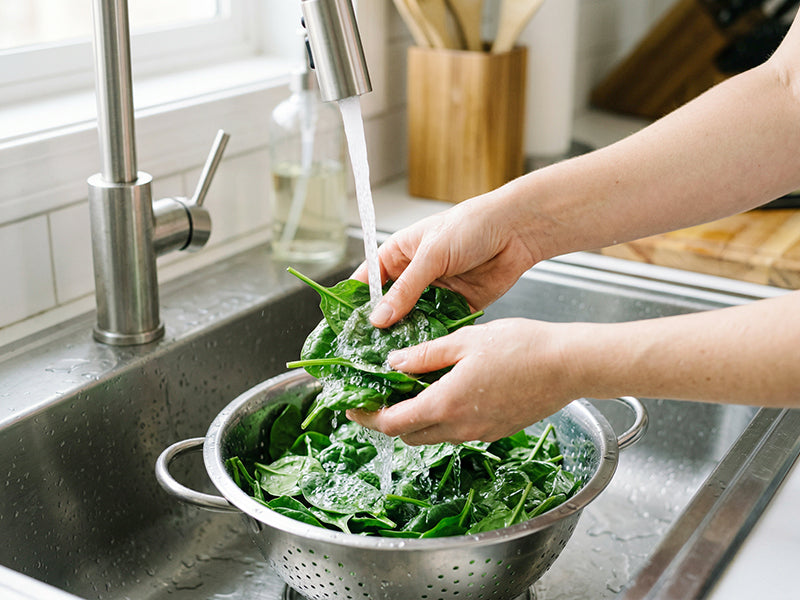
Falls Sie sich jemals gefragt haben, ob Bleikontamination in Lebensmitteln ein Grund zur Sorge ist, hier die direkte Antwort: Blei gelangt hauptsächlich durch kontaminierte Böden, Bewässerungswasser und atmosphärische Ablagerungen in unsere Nahrung, wobei das Risiko stark davon abhängt, wo Ihre Lebensmittel angebaut werden [1][2][3][4]. In stark belasteten Gebieten in der Nähe von Bergwerken, Schmelzwerken oder Industrieanlagen überschreiten Bleigehalte in Gemüse und Getreide oft internationale Sicherheitsgrenzen und stellen echte Gesundheitsrisiken dar, besonders für Kinder [5][6][7][8]. In typischen landwirtschaftlichen Umgebungen mit moderater Altlastaufnahme ist die Pflanzenaufnahme jedoch meist gering, und einfache Maßnahmen wie Waschen, Schälen und der Kauf von Produkten aus sauberen Quellen können die Belastung erheblich reduzieren [1][9][10][11].
So sagt die Wissenschaft, wie Blei aus der Umwelt in Ihre Nahrung gelangt, welche Risikostufen mit Blei verbunden sind und welche praktischen Strategien Sie anwenden können, um die Belastung Ihrer Familie zu minimieren.
Die wichtigsten Quellen verstehen: Woher kommt Blei in Lebensmitteln?

Viele Menschen nehmen an, dass Bleikontamination ein Relikt der Vergangenheit ist, aber Forschungen zeigen, dass Blei weiterhin sowohl durch Altlasten als auch durch laufende Quellen in landwirtschaftliche Umgebungen gelangt.
Bergbau, Schmelzen und industrielle Aktivitäten
Bergbau- und metallurgische Betriebe gehören zu den bedeutendsten Verursachern von Bleikontamination in der Nahrungskette. Emissionen dieser Anlagen lagern luftgetragenes Blei auf Böden und Vegetation ab und schaffen oft regionale Hotspots, in denen Boden- und Futterwerte stark erhöht sind [5][6][12][7][13][14][15].
Forschung aus den Anden-Bergbauregionen Perus liefert ein eindrückliches Beispiel: Grasland in der Nähe des La Oroya-Schmelzwerks zeigte in einigen Studien Bleigehalte in Rohmilch, die die EU-Grenzwerte um etwa das 29-fache überschritten, was ein ernsthaftes Risiko für Säuglinge und Kinder darstellt, die Milchprodukte konsumieren [5][16][17]. Dies zeigt, wie industrielle Punktquellen die gesamte Nahrungskette kontaminieren können, vom Boden über die Weide bis zu tierischen Produkten.
Batterierecyclinganlagen und andere Industriegebiete verursachen ähnliche Probleme. Studien in der Nähe von Blei-Säure-Batterierecyclinganlagen fanden erhöhte Bleikonzentrationen in angrenzenden Böden, Reis, Gemüse und Grundwasser, die weit über den Sicherheitsrichtlinien lagen, wobei die berechneten karzinogenen und nicht-karzinogenen Risiken allein durch den Verzehr von Reis und Wasser die akzeptablen Grenzwerte überschritten [7][13][18].
Abwasserbewässerung: Ein wachsendes globales Problem
Einer der am weitesten verbreiteten Wege, über die Blei in Nahrungspflanzen gelangt, ist kontaminiertes Bewässerungswasser. Wenn unbehandeltes oder teilweise behandeltes kommunales und industrielles Abwasser zur Bewässerung verwendet wird, reichert sich Blei im Boden und in essbaren Pflanzenteilen im Laufe der Zeit an [19][20][21][22][8][23].
Untersuchungen zu Bewässerungspraktiken mit Abwasser zeigen, dass selbst wenn der Bleigehalt im Bewässerungswasser unter den Richtlinien liegt, die langfristige Nutzung zu einer Anreicherung im Oberboden und in essbaren Teilen von Spinat, Radieschen, Blumenkohl und anderen Kulturen auf Niveaus führt, die die FAO-Grenzwerte überschreiten [19][20][21][22][23]. Die für diese Gemüse berechneten Gesundheitsrisikoindizes überschreiten häufig den Schwellenwert von 1, was Anlass zur Sorge gibt, insbesondere für Bevölkerungsgruppen, die diese Lebensmittel regelmäßig konsumieren [19][20][21][22][23].
Eine umfassende Metaanalyse über mehrere Länder hinweg ergab, dass etwa die Hälfte der Bleimessungen in Bewässerungsabwasser die empfohlenen Grenzwerte überschreitet, wobei die zugehörigen Böden und Pflanzen häufig Verschmutzungsindizes über 1 und hohe Pflanzenkonzentrationsfaktoren aufweisen [22]. Das bedeutet, dass Bewässerung mit Abwasser nicht nur ein lokales Problem, sondern ein globales Lebensmittelsicherheitsproblem ist, das Aufmerksamkeit erfordert.
Landwirtschaftliche Inputs und Altlastenbelastung

Phosphatdünger, bestimmte Pestizide und Klärschlamm können im Laufe der Zeit Blei in landwirtschaftliche Böden einbringen, wobei verbesserte Kontrollen in einkommensstarken Ländern den Bleigehalt in Klärschlamm reduziert haben [1][2][3][24][25]. Die historische Verwendung von bleihaltigen Pestiziden, kombiniert mit Ferntransport durch Verkehr, Kohleverbrennung und Industrieemissionen, trägt zu dem bei Forschern als „Legacy“-Blei bezeichneten Bleigehalt in Böden bei, insbesondere in älteren landwirtschaftlichen und städtischen Gebieten [3][9][26][13][10][27].
Diese Hintergrundkontamination bedeutet, dass selbst landwirtschaftliche Betriebe weit entfernt von offensichtlichen Verschmutzungsquellen nachweisbare Bleigehalte im Boden aufweisen können, allerdings meist in Konzentrationen, die bei Einhaltung ordnungsgemäßer landwirtschaftlicher Praktiken ein minimales Risiko darstellen.
Die biologischen Wege: Wie Blei tatsächlich in Ihre Nahrung gelangt
Zu verstehen, wie Blei aus kontaminierten Umgebungen in die Nahrung gelangt, hilft zu erklären, warum bestimmte Lebensmittel und Anbaubedingungen höhere Expositionsrisiken verursachen als andere.
Wurzelaufnahme und Transport in Nutzpflanzen
Forschungen zeigen eindeutig, dass Pflanzen Blei aus Boden und Wasser über ihre Wurzeln aufnehmen und einen Teil davon in essbare Gewebe transportieren können [19][20][21][6][4][14][28][29][24]. Hier wird die Bodenkunde besonders wichtig.
Feld- und Topfstudien bei Gemüse und Getreide zeigen, dass Biokonzentrationsfaktoren und Transferfaktoren stark mit dem pH-Wert des Bodens und dem Gesamtbleigehalt variieren, wobei der Bleigehalt im Korn in sauren Böden deutlich höher ist als in alkalischen Böden [19][20][21][6][4][14][28][29][24]. Tatsächlich zeigen Vorhersagemodelle für Weizen, dass der Gesamtbleigehalt im Boden und der pH-Wert mehr als 80 % der Variation des Bleigehalts im Korn erklären, wobei saure Böden mehrere Male höhere Biokonzentrationsfaktoren als alkalische Böden aufweisen [29][24].
Forschungen in Pakistan und ähnlichen Kontexten zeigten, dass der mittlere Bleigehalt in essbaren Gemüseteilen häufig die Grenzwerte von Codex und FAO überschreitet, besonders bei Blattgemüse und Wurzeln oder Knollen, mit positiven Korrelationen zwischen Bodenblei und Pflanzenblei [19][20][21][22][8][23]. Reissysteme fungieren als wichtiger Senker: Reisböden in der Nähe von Bergbaugebieten oder mit kontaminiertem Wasser bewässert zeigen häufig erhöhte Bleigehalte in den Körnern, was messbar zur menschlichen Ernährung beiträgt [6][4][14].
Auf zellulärer Ebene sammelt sich das meiste Blei in den Wurzeln an, speziell in Zellwänden und Vakuolen, mit begrenztem Transport zu den Trieben bei vielen Arten [30][31][32][25][33]. Dieses Muster ist besonders wichtig für Wurzelgemüse und Futterpflanzen, bei denen die Wurzeln selbst der essbare Teil sind oder von Nutztieren gefressen werden.
Bodenspritzer, Staub und atmosphärische Ablagerung: Der Weg der Oberflächenkontamination
Wenn Sie Blattgemüse oder niedrig wachsende Gemüse anbauen, kann dieser Weg sogar wichtiger sein als die Wurzelaufnahme. Forschungen zeigen, dass bei Blatt- und niedrig wachsenden Kulturen das Blei auf der Oberfläche oft die tatsächliche Wurzelaufnahme überwiegt [31][9][11][34][35].
Studien in Industrie- und Stadtgebieten zeigten, dass Bleikonzentrationen in Blattgemüse oft schlecht mit dem Gesamtblei im Boden korrelieren, aber stark die atmosphärische Ablagerung und Staub widerspiegeln, was auf Blattablagerung und Bodenspritzer als kritische Wege hinweist [9][11][34][35]. Deshalb wird das Waschen von Gemüse besonders wichtig, vor allem wenn Sie es in städtischen Gebieten oder in der Nähe stark befahrener Straßen anbauen.
Experimente mit städtischem Bodengemüse zeigten die höchsten Bleikonzentrationen in modifizierten Wurzelgemüsen wie Rote Bete, Radieschen, Karotten und Steckrüben, gefolgt von Früchten wie Tomaten und Paprika und dann Kartoffeln [9][35]. Die Forscher fanden heraus, dass selbst der Verzehr von unter einem Gramm einiger in stark kontaminierten Böden angebauter Gemüse die vorläufigen Referenzwerte der FDA für Kinder überschreiten kann, was die Bedeutung der Oberflächenkontamination unterstreicht [9][35].
Untersuchungen in den Industriegebieten Shanghais zeigten, dass atmosphärisches Blei aus Kohleverbrennung, Müllverbrennung und stationären Emissionen über die Blätter in das Gewebe von Blattgemüse gelangt. Mithilfe der Bleisotopenanalyse bestätigten die Forscher, dass das Blei in diesen Gemüsen eher den Luftquellen als dem Bodenmaterial entspricht, was klar belegt, dass das, was sich auf Ihrem Gemüse absetzt, genauso wichtig ist wie das, was es über die Wurzeln aufnimmt [34].
Diese Forschung hat wichtige Auswirkungen: Oberflächenkontamination durch Bodenpartikel und Staub ist in Gebieten mit hoher Bleibelastung oft der dominierende Weg für Blattgemüse und einige Wurzelgemüse und reagiert sehr empfindlich auf Bewirtschaftungspraktiken wie Mulchen, Waschen und die Nutzung von Hochbeeten [9][11][34][35].
Der Weg über tierische Produkte: Von kontaminiertem Futter zu Milch und Fleisch

Viele Menschen wissen nicht, dass Blei über tierische Produkte in die menschliche Ernährung gelangen kann, wenn Nutztiere auf kontaminierten Flächen grasen oder gefüttert werden.
Forschungen an Weiden in der Nähe von Bergbau- und Hüttenbetrieben zeigen, dass erhöhte Bleigehalte in Grasland zu hohen Bleigehalten in Grasstängeln und Rohmilch führen [5][16][17]. Die zuvor erwähnten Studien aus Peru fanden so hohe Bleigehalte in Milch, dass sie ein ernsthaftes Risiko für Säuglinge und Kinder darstellen, die Milchprodukte aus diesen Regionen konsumieren [5][16][17].
Flussbewässerte Weiden mit Bergbaukontamination können Bleigehalte im Boden nahe oder leicht über den nationalen Bodennormen aufweisen, dennoch kann Blei in häufigen Weidegräsern wie Lolium und Medicago messbar sein, was im Laufe der Zeit zu einer Anreicherung in Fleisch und Milch führen kann [36].
Historische Versuche mit mit Klärschlamm gedüngten Weiden im Vereinigten Königreich zeigten, dass der dominierende Weg für Weidetiere die direkte Aufnahme von Boden und Klärschlamm ist und nicht die Pflanzenaufnahme [37]. Mit den heutigen reduzierten Bleigehalten in Klärschlamm liegt der Bleigehalt in tierischem Muskelgewebe meist nahe dem Hintergrundniveau, und nur extreme experimentelle Aufnahmen von mehr als 200 mg/kg Blei im Boden führten zu Organbleigehalten über den gesetzlichen Grenzwerten [37]. Dies deutet darauf hin, dass in gut regulierten Systemen das aus Klärschlamm stammende Blei derzeit ein minimales Risiko für die Lebensmittelsicherheit darstellt [37][25].
Akute Vorfälle mit Futtermittelkontamination zeigen jedoch, wie schnell Blei in die Milchversorgung gelangen kann. Die Überwachung einer Milchviehherde in Michigan, die mit zerkleinerten Batterien im Futter exponiert war, zeigte, dass der Bleigehalt in der Milch bei einigen Kühen monatelang über 2 ng/mL blieb, was bei hohem Milchkonsum die Aufnahmerichtlinien für Kleinkinder überschreitet [38][39]. Dies unterstreicht die Bedeutung der Futtermittelqualitätskontrolle in der Tierhaltung.
Hilft oder schadet die Lebensmittelverarbeitung? Die doppelte Rolle der Nacherntebehandlung
Hier wird es interessant, denn die Verarbeitung kann entweder Ihre Bleiexposition drastisch reduzieren oder in manchen Fällen erheblich erhöhen.
Wenn die Verarbeitung die Bleiexposition reduziert
Kontrollierte Experimente zur Lebensmittelverarbeitung zeigen, dass Waschen, Schälen, Blanchieren, Extraktion und Brühen Blei in gängigen Lebensmitteln signifikant reduzieren können [40]. Forschungen, die diese Reduktionen quantifizieren, fanden:
-
Mehr als 79 % Reduktion bei Alkohol-Extraktionsprozessen
-
Ungefähr 48 % Reduktion durch Blanchieren von Blattgemüse
-
Etwa 18 bis 22 % Reduktion durch Kaffeezubereitung und Schälen oder Entsaften von Obst [40]
Das bedeutet, dass einfache Schritte der Lebensmittelzubereitung, die Sie zu Hause durchführen können, wie gründliches Waschen von Obst und Gemüse, Schälen von Wurzelgemüse und Blanchieren von Blattgemüse vor dem Kochen, Ihre Bleiexposition durch kontaminierte Lebensmittel deutlich reduzieren können [1][40][9].
Wenn die Verarbeitung Blei hinzufügt: Kontaminierte Umgebungen und Ausrüstung

Leider reduziert die Verarbeitung nicht immer den Bleigehalt. In bestimmten Kontexten kann die Nacherntebehandlung die Bleikontamination erheblich erhöhen.
Das dramatischste Beispiel stammt aus Zamfara, Nigeria, wo eine Bleivergiftungsepidemie Tausende von Kindern betraf. Forscher entdeckten, dass Grundnahrungsmittelgetreide nach der Ernte kontaminiert wurden, als Dorfbewohner die Körner in Bereichen trockneten, dreschten und mahlten, in denen hochbleihaltiges Golderz zerkleinert wurde [41]. Dieser Kontaminationsweg trug schätzungsweise 11 bis 34 % der Bleikonzentration im Blut der Kinder bei, selbst nach der Bodensanierung, was zeigt, wie stark der Verarbeitungsweg sein kann [41].
Lebensmittelsicherheitsexperten betonen, dass Verarbeitungsausrüstung, Dosenbeschichtungen und Lagerbedingungen die Bleiexposition entlang der „vom Feld bis zum Teller zum Menschen“-Kette einführen oder modulieren können, insbesondere in kleinmaßstäblichen oder informellen Lebensmittelproduktionssektoren [20]. Historisch gesehen trugen bleiverlötete Dosen erheblich zur Bleiexposition bei, und obwohl moderne Vorschriften diese Quelle in Industrieländern weitgehend eliminiert haben, identifizieren Übersichten die Konservenindustrie und Verpackungen weiterhin als potenzielle Quellen, wo Vorschriften schwach sind [1][2].
Wie sieht es mit pflanzlichen Proteinen aus? Sicherheit der Proteinquelle verstehen
Wenn Sie pflanzliche Proteine in Ihre Ernährung integrieren, fragen Sie sich vielleicht, wie deren Bleigehalt im Vergleich zu anderen Proteinquellen ist. Hier wird das Verständnis von Lebensmittelverarbeitung und Ausgangsmaterialien besonders relevant.
Forschungen zeigen, dass pflanzliche Proteinpulverpräparate tendenziell eine höhere Belastung mit Schwermetallen aufweisen als tierische Proteinpulverpräparate. Dies kann darauf zurückzuführen sein, dass Pflanzliche verarbeitete Produkte wie Proteinpulver spiegeln weitgehend den Metallgehalt ihrer Rohzutaten wider, obwohl Verarbeitungsschritte das Spurenelementprofil verändern können [42][43]. Da pflanzliche Proteinpräparate typischerweise aus Samen und Hülsenfrüchten und nicht aus Blattgemüse oder Wurzelgemüse gewonnen werden, zeigen sie oft unterschiedliche Anreicherungsmuster [42][43].
Samen und Hülsenfrüchte nehmen im Allgemeinen weniger Blei auf als Blattgewebe, da Blei hauptsächlich in Wurzeln und Blättern und nicht in den Fortpflanzungsorganen konzentriert ist [31][30][32][25][33]. Darüber hinaus können Proteinextraktions- und Reinigungsprozesse den Gehalt an Spurenelementen weiter verändern und möglicherweise bestimmte Kontaminanten in Vollwertnahrungsmitteln reduzieren [42][43].
Während pflanzliche Proteinpulver möglicherweise höhere Schwermetallwerte enthalten, überschreiten sie möglicherweise nicht die von der FDA festgelegten vorläufigen Referenzwerte (12,5 Mikrogramm pro Tag für gesunde Erwachsene und 8,8 Mikrogramm für Frauen im gebärfähigen Alter). Wenn Sie sich für vegane Proteinpulver entscheiden, ist es wichtig, Produkte von seriösen Herstellern zu verwenden, die auf Schwermetalle testen.
Risikostufen: Wann sollten Sie besorgt sein?
Viele Menschen fragen sich, ob sie sich wegen Blei in ihrer Nahrung Sorgen machen sollten. Die ehrliche Antwort hängt stark davon ab, woher Ihre Lebensmittel stammen und welche Arten von Lebensmitteln Sie am häufigsten essen.
Hochrisikoszenarien, die Aufmerksamkeit erfordern
Forschungen identifizieren konsequent mehrere Szenarien, in denen die bleibedingte Ernährungsexposition zu einem bedeutenden Gesundheitsrisiko wird:
Leben in der Nähe von Bergwerken, Hütten oder Batterierecyclinganlagen: Mehrere Felduntersuchungen und Risikoabschätzungen zeigen, dass in diesen stark kontaminierten Gebieten Blei in Gemüse, Getreide und tierischen Produkten oft internationale Grenzwerte überschreitet, mit Gesundheitsrisikoindizes größer als 1, insbesondere für Kinder und Gruppen mit hohem Konsum [5][21][6][7][22][14][8][23][44].
Verzehr von mit unbehandeltem Abwasser bewässertem Gemüse: Metaanalysen zeigen, dass etwa die Hälfte der Bleimessungen in Bewässerungsabwasser die empfohlenen Grenzwerte überschreitet, wobei die damit bewässerten Gemüse häufig Zielgefährdungsquotienten und Gesundheitsrisikoindizes über sicheren Schwellenwerten aufweisen [19][20][21][22][8][23].
Regelmäßiger Verzehr von Blattgemüse aus Industrie- oder Stadtgebieten: Studien in Industrie- und Stadtgebieten zeigen, dass atmosphärische Ablagerungen erhöhte Bleigehalte in Blattgemüse und niedrig wachsenden Pflanzen durch Oberflächenkontamination verursachen [9][11][34][35].
Kinder, die lokal angebautes Gemüse aus kontaminierten Böden konsumieren: Forschungen zeigen, dass selbst der Verzehr von weniger als einem Gramm einiger in stark kontaminierten Böden angebauter Gemüse die vorläufigen Referenzwerte der FDA für Kinder überschreiten kann [9][35]. Kinder sind besonders gefährdet aufgrund ihres geringeren Körpergewichts und höherer Absorptionsraten.
Niedrigrisikoszenarien, bei denen Bedenken minimal sind

Andererseits liefern Forschungen Beruhigung für viele gängige Ernährungsgewohnheiten:
Typische landwirtschaftliche Umgebungen mit moderater Altlastkontamination: In diesen Umgebungen ist die Pflanzenaufnahme üblicherweise gering, und Risiken können durch richtiges Waschen, Schälen und Pflanzenauswahl effektiv gemanagt werden [1][9][26][10][11].
Gut geführte urbane Gärten unter Anwendung bewährter Praktiken: Studien zur urbanen Landwirtschaft kommen zu dem Schluss, dass bei Verwendung von Hochbeeten mit sauberem Boden, Kompostierung, Auswahl geeigneter Pflanzen und Einhaltung guter Hygienemaßnahmen die Bleiexpositionsrisiken im Vergleich zu anderen Ernährungswegen generell gering sind [9][26][10][11][35]. Einige Übersichtsarbeiten argumentieren, dass die ernährungsphysiologischen und gemeinschaftlichen Vorteile der urbanen Landwirtschaft die bleibezogenen Risiken überwiegen, wenn bewährte Praktiken befolgt werden [9][26][10][11].
Lebensmittel aus Regionen mit strenger behördlicher Aufsicht: In Gebieten mit effektiver Lebensmittelsicherheitsüberwachung und Kontrolle industrieller Emissionen und Abwässer bleibt die bleibedingte Ernährungsexposition durch kommerziell produzierte Lebensmittel für die Allgemeinbevölkerung typischerweise innerhalb akzeptabler Grenzen.
Bodenchemie ist entscheidend: Warum derselbe Bleigehalt unterschiedliche Risiken bedeuten kann

Wenn Sie versuchen, das Risiko in Ihrem eigenen Garten oder bei lokalen Nahrungsquellen einzuschätzen, hilft das Verständnis der Faktoren, die die Bioverfügbarkeit von Blei steuern, zu erklären, warum zwei Böden mit ähnlichen Gesamtbleigehalten sehr unterschiedliche Bleikonzentrationen in Pflanzen hervorbringen können.
Schlüsselfaktoren, die die Bleiaufnahme steuern
Forschungen identifizieren mehrere miteinander wirkende Bodenfaktoren, die bestimmen, wie viel Blei in essbare Pflanzenteile gelangt:
Boden-pH: Dies ist der wichtigste Faktor. Die Bioverfügbarkeit von Blei und die Pflanzenaufnahme steigen dramatisch, wenn der pH-Wert sinkt [2][30][3][4][28][29][33]. Saure Böden können mehrere Male höhere Biokonzentrationsfaktoren aufweisen als alkalische Böden mit gleichem Gesamtbleigehalt [29][24]. Deshalb wird oft die Kalkung zur Anhebung des Boden-pH als Bleiminderungsstrategie empfohlen.
Organischer Substanzgehalt: Organische Substanz kann Blei binden und seine Verfügbarkeit für Pflanzen reduzieren, wobei der Effekt komplex ist, da gelöste organische Verbindungen manchmal bestimmte Metalle mobilisieren können [2][30][3][4][28][29][33].
Phosphorwerte: Ausreichende Phosphorversorgung kann die Bleiaufnahme unterdrücken und die Bildung weniger löslicher Bleiphosphatverbindungen im Boden fördern [2][30][3].
Bodenfeuchtigkeit und Redoxbedingungen: Wasserübersättigte oder reduzierende Bedingungen können die Bleispezies und Mobilität verändern, obwohl Blei im Allgemeinen weniger von Redoxveränderungen betroffen ist als einige andere Metalle [30][3][4].
Diese Faktoren erklären, warum eine effektive Bodenbewirtschaftung mit Fokus auf pH-Anpassung, Zugabe organischer Substanz und richtige Düngung die Bleigehalte in Pflanzen erheblich reduzieren kann, selbst wenn der Gesamtbleigehalt im Boden erhöht bleibt [2][30][3][4][28][25][33].
Praktische Strategien zur Minimierung der Bleiexposition durch Lebensmittel
So können Sie diese Forschung in umsetzbare Schritte übersetzen, die Sie jetzt ergreifen können, um sich und Ihre Familie zu schützen.
Kennen Sie Ihre Lebensmittelquellen
Die wichtigste Strategie ist, zu verstehen, woher Ihre Lebensmittel stammen:
Vermeiden Sie Produkte aus offensichtlich risikoreichen Gebieten: Verzehren Sie kein Gemüse, Getreide oder tierische Produkte aus Gebieten unmittelbar neben Bergwerken, Hüttenwerken, Batterierecyclinganlagen oder Industriegebieten, es sei denn, Tests bestätigen die Sicherheit [5][6][7][13][18][14].
Hinterfragen Sie die Quellen des Bewässerungswassers: Wenn Sie von lokalen Bauernhöfen oder Bauernmärkten kaufen, ist es sinnvoll, nach den Quellen des Bewässerungswassers zu fragen. Bauernhöfe, die behandeltes kommunales Wasser oder sauberes Brunnenwasser verwenden, stellen ein geringeres Risiko dar als solche, die unbehandeltes industrielles Abwasser nutzen [19][20][21][22][8][23].
Berücksichtigen Sie Ihre städtische Umgebung: Wenn Sie in älteren städtischen Gebieten gärtnern, insbesondere in der Nähe stark befahrener Straßen oder ehemaliger Industrieflächen, wird eine Bodenuntersuchung vor der Anlage von Gemüsegärten wichtig [9][26][11][35].
Wählen Sie Lebensmittel mit geringerem Risiko, wenn eine Kontamination möglich ist
Forschungen geben klare Hinweise darauf, welche Lebensmittel tendenziell mehr Blei anreichern:
Blattgemüse und niedrig wachsende Kulturen zeigen die höchsten Bleigehalte in kontaminierten Umgebungen aufgrund sowohl der Wurzelaufnahme als auch der Oberflächenkontamination durch Staub und Bodenspritzer [19][20][21][9][11][34][35].
Wurzelgemüse und Knollen sammeln ebenfalls relativ hohe Mengen an, wobei Blei oft in äußeren Geweben konzentriert ist [9][31][35].
Getreide, Samen und Hülsenfrüchte zeigen im Allgemeinen eine geringere Bleianreicherung als Blattgemüse, mit der bemerkenswerten Ausnahme von Reis in stark kontaminierten Reisanbausystemen [6][4][14][29][24].
Früchte typischerweise weniger Blei ansammeln als Blätter oder Wurzeln, obwohl Oberflächenkontamination durch atmosphärische Ablagerungen weiterhin auftreten kann [9][35].
Das bedeutet nicht, dass Sie Blattgemüse ganz meiden sollten, aber es legt nahe, dass es sinnvoll ist, wenn Sie in oder nahe Risikogebieten leben, Ihre Ernährung zu diversifizieren, um die Exposition zu minimieren.
Verwenden Sie effektive Zubereitungsmethoden

Einfache Zubereitungsschritte können Ihre Bleiexposition erheblich verringern:
Waschen Sie alle Produkte gründlich: Obwohl Waschen Blei, das in Pflanzenteile aufgenommen wurde, nicht entfernt, reduziert es effektiv Oberflächenkontaminationen durch Staub und Erdpartikel [1][40][9]. Dies ist besonders wichtig für Blattgemüse und bodennahe Kulturen.
Schälen Sie Wurzelgemüse: Das Schälen entfernt äußere Gewebe, in denen sich Blei tendenziell anreichert [1][40][9]. Untersuchungen zeigen, dass dies den Bleigehalt je nach Gemüse um 18 bis 22 % oder mehr reduzieren kann [40].
Blanchieren Sie Blattgemüse vor dem Kochen: Studien zeigen, dass das Blanchieren von Blattgemüse den Bleigehalt um etwa 48 % reduzieren kann [40]. Wenn Sie sich Sorgen um Bleiexposition machen, bietet dieser zusätzliche Schritt einen bedeutenden Schutz.
Entfernen und entsorgen Sie die äußeren Blätter: Bei Kohl, Salat und ähnlichen Kulturen beseitigt das Entfernen und Wegwerfen der äußeren Blätter die Gewebe, die am wahrscheinlichsten Oberflächenkontaminationen aufweisen.
Setzen Sie auf kluge Gartenpraktiken
Wenn Sie Ihr eigenes Essen anbauen, unterstützen Forschungen mehrere wirksame Minderungsstrategien:
Testen Sie zuerst Ihren Boden: Bevor Sie einen Gemüsegarten anlegen, besonders in städtischen oder industriellen Gebieten, investieren Sie in eine Bodenanalyse auf Blei und andere Schwermetalle. Dieser einzelne Schritt kann Sie davor bewahren, Lebensmittel in ungeeignetem Boden anzubauen [9][26][11][35].
Verwenden Sie Hochbeete mit sauberem Boden: Beim Anbau von Lebensmitteln in Gebieten mit bekannter oder vermuteter Bodenbelastung isolieren Hochbeete, die mit gekauftem sauberem Oberboden gefüllt sind, die Pflanzen effektiv vom kontaminierten Erdreich [9][26][11][35]. Studien bestätigen dies als eine der effektivsten Strategien für städtische Gärten.
Tragen Sie Kompost auf und halten Sie einen neutralen bis alkalischen pH-Wert: Regelmäßige Kompostgaben und Kalkanwendungen zur Aufrechterhaltung eines Boden-pH-Werts über 6,5 reduzieren die Bioverfügbarkeit von Blei erheblich [2][30][3][9][26][11].
Wählen Sie geeignete Kulturen: Wenn der Bleigehalt im Boden mäßig erhöht ist, Sie aber trotzdem gärtnern möchten, konzentrieren Sie sich auf Früchte, Bohnen und Getreide statt auf Blattgemüse und Wurzelgemüse [9][35].
Verwenden Sie Mulch: Mulchen reduziert das Aufspritzen von Erde auf essbare Pflanzenteile, was besonders wichtig für bodennahe Kulturen ist [9][35].
Betrachten Sie das vollständige Ernährungsspektrum
Forschungen erinnern uns daran, dass Lebensmittel nur ein Weg der Bleiexposition sind. Eine umfassende irische Fallstudie, die Boden- und Wasserbeiträge zur Bleiexposition über Kartoffeln, Karotten, Blattgemüse, Salatgemüse und Trinkwasser integrativ modellierte, fand heraus, dass Kartoffelkonsum und Ackerbodenblei wichtige Sensitivitätsfaktoren sind [1]. Dies unterstreicht die Bedeutung, die gesamte Ernährung zu betrachten, anstatt sich isoliert auf einzelne Lebensmittel zu konzentrieren.
Für Menschen in kontaminierten Gebieten kann eine Reduzierung der Gesamtbelastung bedeuten, den Konsum der am stärksten anreichernden Lebensmittel aus lokalen Quellen zu mäßigen und gleichzeitig eine ausreichende Ernährung durch eine Kombination aus sorgfältig ausgewählten Vollwertkost und verarbeiteten pflanzlichen Proteinen mit unterschiedlichen Expositionsprofilen sicherzustellen.
Häufige Mythen über Blei in Lebensmitteln: Die Fakten richtigstellen

Mythos: Biologischer Anbau eliminiert Blei in Lebensmitteln. Forschungen zeigen, dass die Bio-Zertifizierung zwar synthetische Pestizide und Düngemittel adressiert, aber Blei nicht eliminiert, wenn der zugrundeliegende Boden oder das Bewässerungswasser kontaminiert ist [9][26]. Der entscheidende Faktor sind die Umweltbleiwerte und die Bodenchemie, nicht die Anbaumethode.
Mythos: Kochen zerstört Blei in Lebensmitteln. Im Gegensatz zu einigen Pestiziden oder Mikroorganismen ist Blei ein Element, das durch Hitze nicht abgebaut oder zerstört werden kann [1][2][4]. Kochmethoden beseitigen Blei nicht, obwohl Kochen und das Wegschütten des Kochwassers einige Oberflächenkontaminationen entfernen können.
Mythos: Man kann Bleiverunreinigungen schmecken oder sehen. Blei in gesundheitlich bedenklichen Mengen ist in Lebensmitteln völlig unsichtbar, geschmacklos und geruchlos [1][2][4]. Es kann ohne Labortests nicht erkannt werden.
Mythos: Blei in Lebensmitteln ist nur in Entwicklungsländern ein Problem. Während die höchsten Expositionswerte in stark industrialisierten Entwicklungsländern auftreten, bestätigen Forschungen aus den USA und Europa, dass Altlasten, städtische Böden und spezifische Punktquellen auch in wohlhabenden Ländern lokale Risiken schaffen [1][9][26][11][35].
Mythos: Pflanzliche Ernährung setzt Sie automatisch mehr Blei aus als tierische Ernährung. Forschungen zeigen, dass sowohl pflanzliche als auch tierische Produkte je nach Umweltbedingungen Blei anreichern können [5][16][6][14][38][39]. Entscheidend ist, die Quellen zu kennen, Produkte mit unabhängiger Prüfung auszuwählen und Lebensmittel aus sauberen Umgebungen zu bevorzugen, unabhängig davon, ob sie pflanzlichen oder tierischen Ursprungs sind.
Besondere Überlegungen für gefährdete Bevölkerungsgruppen
Bestimmte Gruppen haben ein erhöhtes Risiko durch diätetische Bleiexposition und müssen möglicherweise besondere Vorsichtsmaßnahmen treffen:
Kinder und Säuglinge
Kinder sind besonders anfällig für Bleivergiftungen aufgrund ihrer:
-
Höhere Absorptionsraten im Vergleich zu Erwachsenen
-
Niedrigeres Körpergewicht, was bedeutet, dass dieselbe absolute Exposition zu höheren Blutbleiwerten führt
-
Sich entwickelnde Nervensysteme, die anfälliger für die neurotoxischen Wirkungen von Blei sind
Forschungen zeigen, dass selbst der Verzehr von unter einem Gramm einiger Gemüse, die in stark kontaminierten Böden angebaut wurden, die vorläufigen Referenzwerte der FDA für Kinder überschreiten kann [9][35]. Wenn Sie Kinder haben und in oder nahe Risikogebieten leben, sollten Sie Bodentests priorisieren, Lebensmittel mit geringer Anreicherung wählen und besonders sorgfältig waschen und schälen.
Schwangere und stillende Frauen

Blei kann die Plazenta passieren und in die Muttermilch gelangen, was die Entwicklung des Fötus und die Gesundheit von Säuglingen beeinträchtigen kann [5][16][38][39]. Schwangere und stillende Frauen sollten besonders vorsichtig bei der Wahl ihrer Lebensmittelquellen sein, wenn sie in kontaminierten Gebieten leben.
Gruppen mit hohem Konsum
Menschen, die große Mengen bestimmter Lebensmittel konsumieren, sind proportional stärker belastet. Die irische Modellstudie zeigte eine starke Empfindlichkeit gegenüber Kartoffelkonsum und verdeutlicht, wie wichtig Ernährungsgewohnheiten sind [1]. Wenn Ihre Ernährung stark auf ein oder zwei Grundnahrungsmittel aus potenziell kontaminierten Quellen setzt, wird die Diversifizierung Ihrer Lebensmittelquellen besonders wichtig.
Die Rolle der Regulierung und was sie für Sie bedeutet
Viele Menschen fragen sich, ob staatliche Vorschriften sie ausreichend vor Blei in Lebensmitteln schützen. Die Forschung legt nahe, dass die Antwort komplex und standortabhängig ist.
Studien weisen immer wieder darauf hin, dass die diätetische Bleibelastung über Lebensmittel trotz gesetzlicher Grenzwerte in vielen Ländern ein bedeutendes öffentliches Gesundheitsproblem bleibt, insbesondere dort, wo kontaminierte Böden, Abwasserbewässerung oder Industrieemissionen schlecht kontrolliert werden [1][4][13][22][45]. Das zeigt uns, dass zwar Vorschriften existieren, deren Durchsetzung und Quellenkontrolle jedoch regional stark variieren.
In gut regulierten Systemen mit strengen industriellen Emissionskontrollen, Standards für behandeltes Abwasser und regelmäßiger Lebensmittelüberwachung sind die Risiken in der Regel gut gemanagt [37][25][26][10]. In Regionen mit schneller Industrialisierung, informellen Recyclingbetrieben oder begrenzter Regulierungsfähigkeit können die Lebensmittel jedoch Bleigehalte aufweisen, die echte Gesundheitsrisiken darstellen [7][18][20][21][22][8][23][44].
Deshalb ist es so wichtig, Ihre Lebensmittelquellen zu kennen. Sie können sich nicht allein auf Vorschriften verlassen, um Sie zu schützen, besonders wenn Sie Lebensmittel aus Gebieten mit bekannter Kontamination oder schwacher Durchsetzung beziehen.
Wann Sie professionelle Beratung suchen sollten
Erwägen Sie, eine registrierte Ernährungsberaterin, einen Arzt oder einen Spezialisten für Umweltgesundheit zu konsultieren, wenn:
-
Sie leben in einem Gebiet mit bekannter Boden- oder Wasserkontamination durch Bergbau, Hüttenwerke, Industrieanlagen oder Abwasserbewässerung.
-
Sie sind schwanger, stillen oder ernähren kleine Kinder und machen sich Sorgen über Bleibelastung.
-
Sie haben einen Hausgarten in einer städtischen Gegend oder in der Nähe von Industrieanlagen und möchten eine Anleitung für sichere Lebensmittelproduktion.
-
Sie haben Symptome, die mit Bleibelastung zusammenhängen könnten.
-
Sie möchten personalisierte Ernährungsstrategien, die optimale Nährstoffversorgung mit Minimierung der Belastung in Ihrem spezifischen Kontext ausbalancieren.
-
Sie erwägen eine Boden- oder Lebensmittelanalyse und benötigen Hilfe bei der Interpretation der Ergebnisse und bei fundierten Entscheidungen
Ein qualifizierter Fachmann kann Ihnen helfen, Ihre individuellen Risikofaktoren zu bewerten, einen Ernährungsplan zu entwickeln, der Ihren Bedürfnissen entspricht und die Exposition minimiert, sowie zu bestimmen, ob eine Blutblei-Untersuchung für Sie oder Ihre Familienmitglieder sinnvoll ist.
Das Fazit: Wissen und kluge Entscheidungen schützen Sie

Blei gelangt auf mehreren Wegen in unsere Lebensmittelversorgung, darunter kontaminierter Boden, Bewässerungswasser, atmosphärische Ablagerungen und gelegentlich durch Verarbeitungsumgebungen [1][2][3][4][19][9][11][34][40][41]. Das Risiko, dem Sie ausgesetzt sind, hängt stark davon ab, wo Ihre Lebensmittel angebaut werden, welche Arten von Lebensmitteln Sie konsumieren und wie Sie diese zubereiten.
Für die meisten Menschen, die kommerziell produzierte Lebensmittel aus gut regulierten landwirtschaftlichen Systemen essen, bleibt die Bleiaufnahme über die Nahrung innerhalb akzeptabler Grenzen und stellt ein geringes Risiko dar. Wenn Sie jedoch in der Nähe von Bergwerken, Hüttenwerken, Industrieanlagen oder in Gebieten leben, in denen unbehandeltes Abwasser zur Bewässerung verwendet wird, oder wenn Sie in städtischen Böden mit unbekannter Kontamination gärtnern, können die Risiken erheblich sein, insbesondere für Kinder [5][6][7][19][20][21][9][35].
Die gute Nachricht ist, dass Sie Ihre Exposition durch informierte Lebensmittelwahl, effektive Zubereitungsmethoden und kluge Gartenpraktiken, wenn anwendbar, erheblich kontrollieren können. Das Verständnis Ihrer lokalen Umgebung, die Diversifizierung Ihrer Nahrungsquellen einschließlich der Einbeziehung pflanzlicher Proteine aus sauberen Quellen, gründliches Waschen und Schälen von Produkten, die Aufrechterhaltung eines angemessenen Boden-pH-Werts im Hausgarten und die Nutzung von Hochbeeten bei Bedarf bieten einen bedeutenden Schutz [1][9][26][40][11][35][42][43].
Forschung zeigt eindeutig, dass die Kontrolle von Blei an der Quelle durch industrielle Emissionskontrollen, Abwasserbehandlung und Bodensanierung die effektivste langfristige Lösung ist [1][2][4][13][22][25][33]. Als Verbraucher können wir diese Bemühungen durch Interessenvertretung unterstützen und gleichzeitig praktische Schritte unternehmen, um uns und unsere Familien jetzt zu schützen.
Die Kernbotschaft lautet: Die Aufnahme von Blei über die Nahrung ist in bestimmten Kontexten ein echtes Problem, aber mit Wissen über die Wege, Bewusstsein für lokale Bedingungen und der Umsetzung einfacher Schutzmaßnahmen können Sie Ihr Risiko erheblich reduzieren und gleichzeitig eine nahrhafte, abwechslungsreiche Ernährung beibehalten, die eine optimale Gesundheit unterstützt.
**Haftungsausschluss: Dieser Inhalt dient nur zu Informationszwecken und stellt keine medizinische oder umweltgesundheitliche Beratung dar. Die Risiken einer Bleiexposition variieren je nach Standort, Herkunft und individuellem Gesundheitszustand. Wenn Sie sich Sorgen über eine mögliche Exposition machen – insbesondere für Kinder oder während der Schwangerschaft – konsultieren Sie bitte eine qualifizierte medizinische Fachkraft oder die örtliche Gesundheitsbehörde.
Literaturverzeichnis
[1] Nag, R., & Cummins, E. (2021). Risikoabschätzung für die menschliche Gesundheit durch Blei (Pb) über den Umwelt-Nahrungsmittel-Weg. The Science of the Total Environment, 151168.
[2] Kumar, A., et al. (2020). Bleitoxizität: Gesundheitsgefahren, Einfluss auf die Nahrungskette und nachhaltige Sanierungsansätze. International Journal of Environmental Research and Public Health, 17.
[3] Bouida, L., et al. (2022). Eine Übersicht über Cadmium- und Bleikontamination: Quellen, Schicksal, Mechanismus, gesundheitliche Auswirkungen und Sanierungsmethoden. Water.
[4] Rai, P., et al. (2019). Schwermetalle in Nahrungspflanzen: Gesundheitsrisiken, Schicksal, Mechanismen und Management. Environment International, 125, 365-385.
[5] Castro-Bedriñana, J., et al. (2021). Bleitransfer im Boden-Wurzel-Pflanzen-System in einem stark kontaminierten Anden-Gebiet. PeerJ, 9.
[6] Ali, W., et al. (2020). Umfassende Übersicht über das grundlegende chemische Verhalten, Quellen, Prozesse und Endpunkte der Spurenelementkontamination in Reis-Boden-Systemen in Reisanbauländern. Journal of Hazardous Materials, 397, 122720.
[7] Kumar, S., et al. (2021). Anreicherung und Translokation von Blei in Gemüse durch intensiven Einsatz von organischem Dünger und mineralischen Düngemitteln mit Abwasser. Chemosphere, 133288.
[8] Rehman, Z., et al. (2017). Blei- und Cadmiumkontamination und Risikobewertung der Exposition durch den Verzehr von in landwirtschaftlichen Böden angebautem Gemüse aus fünf ausgewählten Regionen Pakistans. Chemosphere, 168, 1589-1596.
[9] Paltseva, A., et al. (2018). Anreicherung von Arsen und Blei in im Garten angebautem Gemüse: Faktoren und Minderungsstrategien. The Science of the Total Environment, 640-641, 273-283.
[10] Brown, S., et al. (2016). Blei in städtischen Böden: Ein reales oder wahrgenommenes Problem für die städtische Landwirtschaft? Journal of Environmental Quality, 45(1), 26-36.
[11] Byers, H., et al. (2020). Erhöhtes Risiko für Bleiexposition bei Kindern durch den Verzehr von in städtischen Böden angebautem Gemüse. The Science of the Total Environment, 743, 140414.
[12] Xu, J., et al. (2022). Quellen, Transfers und Schicksal von Schwermetallen in Boden-Weizen-Systemen: Der Fall einer Blei (Pb)/Zink (Zn) Schmelzregion. Journal of Hazardous Materials, 441, 129863.
[13] Lu, Y., et al. (2015). Auswirkungen von Boden- und Wasserverschmutzung auf Lebensmittelsicherheit und Gesundheitsrisiken in China. Environment International, 77, 5-15.
[14] Zakaria, Z., et al. (2021). Verständnis der potenziellen Schwermetallkontamination, Absorption, Translokation und Akkumulation in Reis und Gesundheitsrisiken für den Menschen. Plants, 10.
[15] Wei, X., et al. (2020). Gesundheitsrisiken von Metall(loid)en in Mais (Zea mays L.) in einer handwerklichen Zinkschmelzzone und Quellen-Fingerabdruck mittels Blei-Isotop. The Science of the Total Environment, 742, 140321.
[16] Chirinos-Peinado, D., et al. (2024). Bewertung des Gesundheitsrisikos und des trophischen Transfers von Blei und Cadmium in Milchviehhaltungssystemen im Mantaro-Einzugsgebiet, Zentralanden von Peru. Toxics, 12.
[17] Chirinos-Peinado, D., et al. (2021). Transfer von Blei vom Boden zum Weidegras und zur Milch in der Nähe eines metallurgischen Komplexes in den peruanischen Anden. Translational Animal Science, 5.
[18] Majumder, A., et al. (2021). Kritische Übersicht der Bleiverunreinigung in Bangladesch. Journal of Health & Pollution, 11.
[19] Amjad, M., et al. (2024). Anreicherung und Verlagerung von Blei in Gemüse durch intensive Nutzung von organischem Dünger und Mineraldüngern mit Abwasser. Scientific Reports, 14.
[20] Akhtar, S., et al. (2022). Bewertung der Bleitoxizität unter verschiedenen Bewässerungsregimen und potenzielle gesundheitliche Auswirkungen von landwirtschaftlich angebauten Nutzpflanzen in Pakistan. Agricultural Water Management.
[21] Khalid, S., et al. (2017). Einfluss von Grundwasser- und Abwasserbewässerung auf die Bleianreicherung in Boden und Gemüse: Auswirkungen auf die Gesundheitsrisikobewertung und Phytosanierung. International Journal of Phytoremediation, 19, 1037-1046.
[22] Ali, A., et al. (2022). Metaanalyse der öffentlichen Gesundheitsrisiken durch Bleianreicherung im Zusammenhang mit Abwasser, bewässertem Boden und Nutzpflanzen. Frontiers in Public Health, 10.
[23] Hamoud, Y., et al. (2024). Cadmium- und Bleianreicherung in wichtigen Nahrungspflanzen durch Bewässerung mit Abwasser: Verschmutzungsindex und Bewertung der Gesundheitsrisiken. Heliyon, 10.
[24] Liu, K., et al. (2016). Artübergreifende Extrapolation von Modellen zur Vorhersage des Bleitransfers vom Boden zum Weizenkorn. PLoS ONE, 11.
[25] Rigby, H., & Smith, S. (2020). Die Bedeutung von Cadmium, das über die Aufnahme durch Nutztiere aus der landwirtschaftlichen Nutzung von Klärschlamm in die menschliche Nahrungskette gelangt, mit besonderem Bezug auf das Vereinigte Königreich. Environment International, 143, 105844.
[26] Frank, J., et al. (2019). Systematische Übersicht und Metaanalysen der Bleikonzentrationen (Pb) in Umweltmedien (Boden, Staub, Wasser, Lebensmittel und Luft) in den USA von 1996 bis 2016. The Science of the Total Environment, 694, 133489.
[27] Guerrieri, N., et al. (2024). Nahrungspflanzen und Umweltkontamination: Ein Update. Toxics, 12.
[28] Wu, X., et al. (2020). Aufnahme von Blei (Pb) in Weizenkörnern (Triticum aestivum L.), Transferfaktoren und Vorhersagemodelle für verschiedene Bodentypen aus China. Ecotoxicology and Environmental Safety, 206, 111387.
[29] Wu, X., et al. (2020). Aufnahme von Blei (Pb) in Weizenkörnern (Triticum aestivum L.), Transferfaktoren und Vorhersagemodelle für verschiedene Bodentypen aus China. Ecotoxicology and Environmental Safety, 206, 111387.
[30] Kushwaha, A., et al. (2018). Eine kritische Übersicht über Speziation, Mobilisierung und Toxizität von Blei im Boden-Mikroben-Pflanzen-System und Bioremediation-Strategien. Ecotoxicology and Environmental Safety, 147, 1035-1045.
[31] Wierzbicka, M., & Antosiewicz, D. (1993). Wie Blei leicht in die Nahrungskette gelangen kann: Eine Studie an Pflanzenwurzeln. The Science of the Total Environment, Suppl Pt 1, 423-429.
[32] Aslam, M., et al. (2021). Bleitoxizität in Getreide: Mechanistische Einblicke in Toxizität, Wirkungsweise und Management. Frontiers in Plant Science, 11.
[33] Zhao, F., et al. (2021). Toxische Metalle und Metalloide: Aufnahme, Transport, Entgiftung, Phytosanierung und Pflanzenzüchtung für sicherere Lebensmittel. Molecular Plant.
[34] Bi, C., et al. (2018). Schwermetalle und Bleiisotope in Böden, Straßestaub und Blattgemüse sowie Gesundheitsrisiken durch Gemüsekonsum in den Industriegebieten von Shanghai, China. The Science of the Total Environment, 619-620, 1349-1357.
[35] Byers, H., et al. (2020). Erhöhtes Risiko für Bleiexposition bei Kindern durch den Verzehr von in städtischen Böden angebautem Gemüse. The Science of the Total Environment, 743, 140414.
[36] Orellana, E., et al. (2019). Blei in landwirtschaftlichen Böden und bewässerten Weiden mit Flusswasser, das durch Bergbautätigkeit kontaminiert ist. Journal of Ecological Engineering.
[37] Smith, S., & Rigby, H. (2024). Die Bedeutung des Bleieintrags in die menschliche Nahrungskette durch Viehaufnahme infolge der landwirtschaftlichen Nutzung von Klärschlamm, mit besonderem Bezug auf das Vereinigte Königreich. The Science of the Total Environment, 172135.
[38] Sheffler, R., et al. (2025). Überwachung von Milch und Vollblut nach tödlicher und subletaler Bleivergiftung in einer Milchviehherde in Michigan. Toxics, 13.
[39] Sarker, Y., et al. (2020). Umweltkontamination durch Blei in Milchviehbetrieben in Narayangonj, Bangladesch. Journal of Advanced Veterinary and Animal Research, 7, 621-625.
[40] Lee, J., et al. (2020). Vergleichende Analyse des Bleigehalts während der Lebensmittelverarbeitung. Food Science and Biotechnology, 29, 1063-1069.
[41] Tirima, S., et al. (2017). Lebensmittelkontamination als Weg der Bleiexposition bei Kindern während der Bleivergiftungsepidemie 2010-2013 in Zamfara, Nigeria. Journal of Environmental Sciences, 67, 260-272.
[42] Bethencourt-Barbuzano, E., et al. (2025). Pflanzliche Proteinpräparate als aufkommende Quellen der Metallbelastung: Eine Risikobewertungsstudie. Journal of Trace Elements in Medicine and Biology, 91, 127703.
[43] Román-Ochoa, Y., et al. (2021). Schwermetallkontamination und Gesundheitsrisikobewertung in Getreide und getreidebasierten verarbeiteten Lebensmitteln in der Region Arequipa, Peru. Chemosphere, 274, 129792.
[44] Wei, X., et al. (2020). Gesundheitsrisiken von Metall(oid)en in Mais (Zea mays L.) in einer handwerklichen Zinkschmelzregion und Quellenfingerabdruck durch Bleiisotope. The Science of the Total Environment, 742, 140321.
[45] Angon, P., et al. (2024). Quellen, Auswirkungen und aktuelle Perspektiven der Schwermetallkontamination: Boden, Pflanzen und menschliche Nahrungskette. Heliyon, 10.