
There is a wide range of whey protein powders on the market, often with fancy packaging and health claims to go with it. So how do you know which is the best quality and the one that’s right for you?
Keep reading to learn how processing affects the final product and why cold-processed grass-fed whey is better.
Why Processing Matters
The processing of whey protein matters because, under certain circumstances, protein can become denatured.
Denaturing occurs when the protein is exposed to elements capable of changing its structure.
Factors that can cause the denaturation of proteins include extreme temperatures (both hot and cold), extreme pH levels, UV radiation exposure, and physical manipulation.
If a protein is denatured enough, it can become less bioavailable (meaning how well your body absorbs the protein). The method by which whey is processed can also affect the vitamin and mineral profile of the product.
Impact of Heat on Whey Protein During Processing

Pasteurization is a heat-treatment process required by the FDA that destroys pathogenic microorganisms in certain foods and beverages like milk. When the heat applied during pasteurization exceeds the protein’s threshold, the tertiary and quaternary structures of the protein are denatured.
Keep in mind the body denatures protein on its own through digestion in order to break it down to its amino acids for future use. Denaturation is not necessarily a bad thing, however to the degree to which the protein becomes changed can affect its bioavailability.
Proteins include primary, secondary, tertiary, and quaternary structures. The primary structure houses the blueprints of the secondary, tertiary, and quaternary structures.
As long as the primary structure is not damaged during processing, the protein retains its potential bioavailability.
Why Cold Processing is Better
A cold-processed whey protein powder is processed in a way that reduces exposure to extreme temperatures that can alter, denature, and potentially decrease the bioavailability of the proteins and other nutrients.
Cold-processing (or cold-pressing) is considered the more superior way to process whey protein because valuable nutrients – including amino acids and essential vitamins and minerals – are well-protected and the protein content in the end product is greater.
Cold processing produces a non-denatured whey protein.

What is Non-Denatured Grass-Fed Whey Protein?
Cows raised on commercial farms (feed-lot cows) are often fed a diet that includes mostly corn and other grains.
Grass-fed cows are left to roam in pastures of grass, feeding on their naturally-intended food. As a result, they are not exposed to GMO corn and grain diets that many commercially-raised cows receive.
The nutritional profile of meat and dairy products sourced from grass-fed cows is very different than that of feed-lot cows. Products from feed-lot cows are higher in saturated fat, while grass-fed cows yield dairy and meat that are lower in saturated fat and higher in omega-3 and conjugated linoleic fatty acids (CLAs). Omega-3s and CLAs have a number of health benefits including improved cardiovascular health and brain health.
Non-denatured grass-fed whey protein is a protein powder that is sourced from grass-fed cows and undergoes cold processing.
Cold Processing and Bioavailability
Bioavailability refers to a protein’s nutritional potential in terms of the amino acid profile value, and the body’s ability to break down and absorb the protein in the small intestine efficiently.
Both Vat & HTST pasteurization methods are considered “cold-processing.” Both methods destroy pathogens while keeping protein structures intact.
Vat Pasteurization requires heating the milk for 30 min at 145°F, while HTST (High-temperature short-time) pasteurization requires heating the milk for 15 seconds at a minimum temperature of 161°F.
Research shows that proteins generally begin to denature at 40°C (104°F). When milk undergoes pasteurization, denaturation occurs, but this is reversible. When the milk cools, the protein structures reform as if the denaturation never happened.
Studies show that β-lactoglobulin (LG) is one component of milk that is most sensitive to temperature-related denaturing. Evidence suggests that either of the “cold-processing” pasteurization methods leaves protein structures intact.
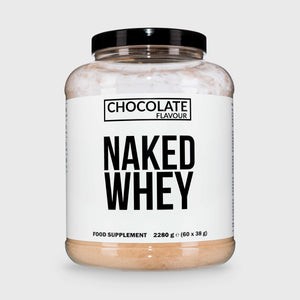
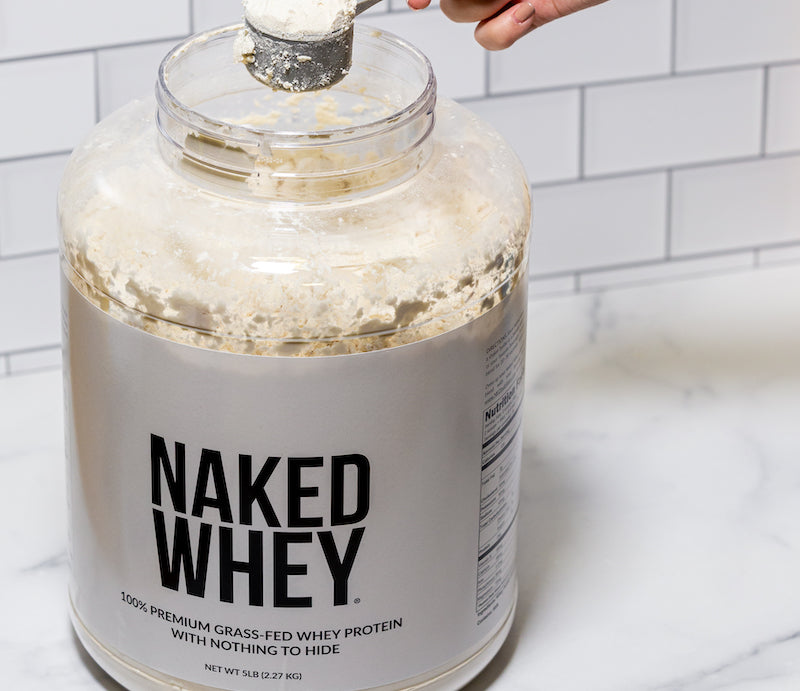
Naked Whey is cold processed and contains high amounts of bioavailable protein, CLAs, and Omega 3s.
It also contains only one ingredient: grass-fed whey protein powder sourced from cows raised on the pastures of small Northern California and Idaho dairy farms.
Can I Heat My Whey Protein Powder?

Short answer: Yes, you can heat your whey protein powder.
Cooking or baking with whey protein powder does not destroy it.
The same thing happens when you heat eggs, meat, or any other food that contains protein. Your body also denatures protein during digestion. Even though the structure has changed, it still provides the same nutritional value.
As long as the primary structure of the protein stays intact, it still retains its potential bioavailability.
Bottom Line
A cold-processed whey protein like Naked Whey is processed at lower temperatures which helps keep proteins and other nutrients intact.
Grass-fed whey is lower in saturated fat and contains more omega-3s and CLAs. Cold-processed grass-fed whey contains highly bioavailable protein and other nutrients.