Skip to content

★★★★★ 1,000,000+ Happy Customers

Free Shipping On Orders $99+

Take the quizLink to /en-ro/pages/supplements-quiz

Your cart is empty

Continue shopping or browse the categories below to add items to your cart.

How Casein Protein is Produced

How Casein Protein is Produced

Although it is often overshadowed by whey, casein protein is a highly useful supplement for many athletes and exercises. Why? What makes casein special?


To fully understand the difference between casein and whey – including casein's value, we need to look at how these supplements are made.


Specifically, how is casein protein produced?


Curds and Whey


Like whey, casein is a byproduct of cheese-making. Actually, casein is often made into cheese, rather than making it to your tub as a powder.


In this process, a curdling agent – generally acid or heat – is applied to milk to separate the solids and the liquids. This causes the curds to clump up and float on top of the liquid whey. These solids are then skimmed off to meet with one of two fates.


Either they become cheese or, of more interest to us, they become casein. Of course, they must first be dehydrated and powdered before they're of any use as a supplement. So, why does this matter?
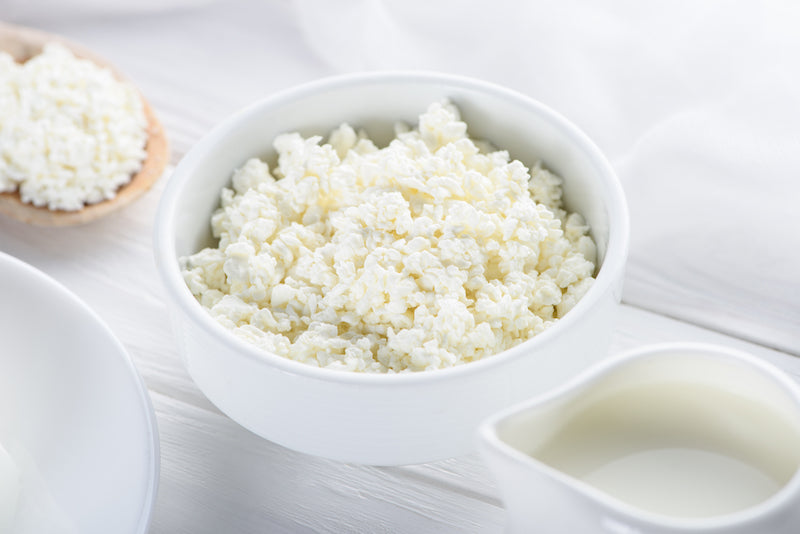
 

Cheese curds before they're made into casein protein


Why You Should Care


The production that goes into casein vividly illustrates a unique characteristic of casein that gives it some fairly specialized benefits. As mentioned, casein has a tendency to congeal and form a solid mass – this trait is what allows it to be pulled away from whey.


But casein does the same thing in your body. Even after it's been powdered, the proteins that make up casein love to form a gel-like structure.


For one thing, this makes casein a fantastic, nutritious thickener when used in shakes and other recipes. There is a much more interesting, less obvious, application, however. When casein is digested and exposed to your stomach acids, it once again clots up.


Sure, this might sound unpleasant and undesirable but, the truth is that this reduces absorption speed. Once casein is in your stomach, then, it essentially keeps you fed for several hours. Whereas whey is very rapidly broken down and put to work, casein takes its time.


Naked Casein product image with a tub of Naked Casein next to two banana protein shakes and a bunch of bananas


For this reason, many bodybuilders will take casein right before going to sleep to ensure that their muscles are fed throughout the night. Casein, then, provides a highly effective meal replacement, with the ability to keep you feeling full for much longer than whey can.


Alternatively, whey and casein can be used to complement each other and make a potent weight-gainer. Because both of these milk-based proteins are complete and rich in amino acids, they are powerful ways to stimulate muscle growth.


And the difference in absorption rates means that all of your protein needs will be met throughout the day.

Related Articles

Best Protein Powder to Mix With Coffee

If you want to increase your protein intake, squeezing it in during snacks and meals can sometimes feel a bit much. Thankfully, protein powders exist but they aren’t always easy to incorporate, especially if you are new to making your own shakes.  Enter protein coffee, aka Proffee. This new trend involves incorporating a protein powder or shake into your morning...

Link to theBest Protein Powder to Mix With Coffeearticle

Best Protein Powder for Children: Evidence-Based Safety Guide for Parents 2025

The bottom line: Research shows that no single protein powder is universally "best" for children, but several safe and effective options include milk-based, soy protein hydrolysate, amaranth, and fish-derived proteins.  The optimal choice depends on your child's individual allergies, nutritional needs, and health status. Always consult your pediatrician before introducing protein supplements to your child's diet [1, 2, 3, 4]....

Link to theBest Protein Powder for Children: Evidence-Based Safety Guide for Parents 2025article

Is Organic Whey Protein Healthier? Evidence-Based Analysis 2025

The bottom line: Current research shows no significant health advantages of organic whey protein over conventional forms. Both types provide identical muscle-building, metabolic, and recovery benefits that make whey protein valuable for health and performance [1, 2]. **Disclaimer: This article is for informational purposes only and does not constitute medical or nutritional advice. Always consult a qualified healthcare provider or...

Link to theIs Organic Whey Protein Healthier? Evidence-Based Analysis 2025article

What Are the Common Side Effects of Whey Protein? Complete 2025 Safety Guide

While there is the generic worry of supplements causing negative reactions, is whey protein really much of a concern? In this article, we look at the possible side effects.

Link to theWhat Are the Common Side Effects of Whey Protein? Complete 2025 Safety Guidearticle