




People tend to assume that, just because it's whey protein, a particular protein supplement is automatically safe and healthy. Unfortunately, this is not always true. The whey protein category is enormous, worth billions of dollars globally, and that kind of market size attracts manufacturers who are more interested in profit margins than in what actually ends up in your body.
The supplement industry in the United States operates under far looser regulations than the pharmaceutical industry. The FDA does not approve dietary supplements before they go to market. Manufacturers are not required to prove their products are safe or effective before selling them. And unless a product causes serious harm after it hits shelves, regulatory action is slow and inconsistent. This is the environment that low-quality whey protein thrives in.
Sometimes these low-quality whey protein supplements sell because they're abnormally cheap. But that doesn't have to be the case every time. In fact, some very well-known and relatively costly whey protein supplements have been found to be contaminated with dangerous and otherwise unwanted substances. Price and brand recognition are not reliable indicators of quality or purity, and that's a problem most consumers simply aren't aware of. A slick label, a popular influencer endorsement and a mid-range price point can make a product feel trustworthy without any of that actually being grounded in the quality of what's inside the tub.
Despite what the labels claiming that their whey is somehow special and superior may lead you to believe, most companies use whey from the same source. That powder is then further processed, flavored and packaged under a brand name that you're more likely to recognize and trust. In other words, the marketing is doing a lot of heavy lifting that the actual product can't back up. Two protein powders sitting on the same shelf, from two completely different brands, could have started from the exact same raw whey before any flavoring or processing happened.
Very often, these problematic whey protein powders come from China and are sold throughout the world. Since there's a real possibility you've unknowingly purchased a whey protein powder sourced from China at some point, it's worth asking a direct question: is Chinese whey protein safe?
Contaminants and Practices
Supplements imported from China have a long and poor history when it comes to overall quality. Several studies have found traditional Chinese herbal supplements to be tainted with all sorts of things, including actual pharmaceutical drugs, heavy metals and even DNA from endangered species like the snow leopard. This isn't a fringe concern or an isolated incident. It's a documented, recurring pattern across multiple product categories that has persisted for years despite growing awareness of the problem.
When it comes to whey specifically, the risks are just as real. Whey is derived from milk, and the quality of that whey is directly tied to the quality of the dairy farming practices behind it. In environments where pollution and contamination are widespread, those problems don't stay on the farm. They follow the product all the way through processing, packaging and shipping until they end up in what you're scooping into your blender every morning.
Specifically looking at whey protein supplements, Consumer Reports performed a review of 15 popular whey protein products and found that several of the products on their list could quickly expose users to toxic levels of heavy metals, including cadmium, lead and arsenic. Several of these contaminated whey proteins started their life in China. These aren't just trace amounts. We're talking about levels that, with regular daily use, can accumulate to genuinely dangerous concentrations in the body over time. Heavy metal toxicity doesn't usually announce itself immediately. It builds slowly, and by the time symptoms become obvious, significant damage may have already occurred.
In part, this is due to the unusually high rate of pollution seen throughout the country. According to a 2014 report from the Chinese Ministry of Environmental Protection, about one-fifth of all farmland in the country is heavily contaminated with toxic metals like arsenic, cadmium and lead. This includes land that is used to raise the dairy cows that then produce whey. When cattle graze on contaminated soil, drink contaminated water and eat contaminated feed, those heavy metals work their way into the milk. And what goes into the milk eventually ends up in the whey protein powder you're mixing into your post-workout shake.
Cadmium is particularly concerning because it accumulates in the kidneys and has a biological half-life of decades, meaning the body clears it extremely slowly. Chronic low-level cadmium exposure has been linked to kidney damage, bone density loss and an increased risk of certain cancers. Lead exposure affects the nervous system and is especially harmful in children, though adults are not immune to its effects. Arsenic, even at relatively low doses, has been associated with cardiovascular disease, diabetes and cancer with long-term exposure. None of these are substances you want showing up in a product you're consuming every single day in the name of your health.
The toxic elements found in Chinese whey protein and other supplements are not always there by accident, however. Because of lax government standards and regulations on supplements in China, many manufacturers add ingredients that are dangerous and unwanted, and they are able to do this without placing those ingredients on the label. This isn't just a regulatory loophole. It's an open door for deliberate adulteration. Without mandatory third-party testing requirements and meaningful enforcement, there's very little stopping a manufacturer from cutting corners in ways that are completely invisible to the consumer who's just reading the nutrition facts panel on the back of the tub.
There's also the widespread problem of protein spiking, sometimes called amino spiking. This is a deceptive practice where cheap, non-protein nitrogen sources are added to whey powder to artificially inflate the measured protein content. Standard protein testing methods measure nitrogen content and use that to calculate protein. When manufacturers add cheap amino acids like taurine, glycine or creatine, or other nitrogen-containing compounds, the test reads those as protein even though they don't provide the same nutritional benefit as actual whey protein. A product can appear to hit 25 grams of protein per serving on paper while actually delivering significantly less usable whey protein than advertised. You're paying for protein and getting filler. This practice is more common than most people realize, and it's particularly prevalent in markets with weak regulatory oversight.
Beyond contamination and spiking, there's a quality issue that's less sinister but equally worth understanding. The quality of whey protein varies significantly depending on how it's processed. Whey that has been subjected to high heat during processing loses much of its nutritional value. Denatured proteins are less bioavailable, and many of the naturally occurring beneficial compounds in whey, including immunoglobulins, lactoferrin and beta-lactoglobulin, are heat-sensitive and can be degraded through aggressive processing. Manufacturers who are optimizing for cost rather than quality have little incentive to use cold-processing methods, and the consumer usually has no way of knowing how the whey was processed just by looking at the label.
What to Look for on the Label
One of the simplest ways to protect yourself is to actually read the ingredient list. A clean whey protein should have a short, recognizable list of ingredients. If you see a long string of additives, fillers, artificial sweeteners and ingredients you can't pronounce, that's worth paying close attention to. Every additional ingredient is another variable, and in a market with limited regulatory oversight, more variables means more opportunity for something unwanted to make its way into the formula.
Beyond the ingredient list, look for products that are verified by a reputable third-party testing organization. Certifications from groups like Informed Sport, NSF Certified for Sport or Banned Substances Control Group indicate that the product has been independently tested for contaminants and that the label accurately reflects what's actually in the product. These certifications require ongoing testing and re-certification, not a one-time approval. They aren't a perfect guarantee, but they represent a meaningful additional layer of accountability that most cheap, import-heavy brands simply don't bother pursuing.
Find out where the whey is actually sourced. This is a question that surprisingly few consumers think to ask, and it's one that brands with something to hide tend to be vague about. A product can be manufactured in the United States and still use whey imported from overseas. The "Made in USA" label on the front doesn't tell you where the raw protein actually came from. Look for brands that are transparent and specific about their sourcing, ideally pointing to US-based, grass-fed dairy operations that operate under stricter environmental and agricultural standards than their overseas counterparts.
You should also pay attention to how a brand talks about its testing practices. Do they make their third-party lab results publicly available? Can you look up a specific batch? Transparency in testing is one of the clearest signals that a brand is confident in what its product actually contains. Brands that are vague about testing, or that only mention it in passing without any specifics, are not giving you a reason to feel confident.
Why Grass-Fed and US-Sourced Matters
Grass-fed cows raised on US farms produce milk that is nutritionally different from milk produced by conventionally raised cows, and those differences carry through into the whey. Grass-fed dairy tends to have a better fatty acid profile, including higher levels of omega-3 fatty acids and conjugated linoleic acid. The cows are not routinely given recombinant bovine growth hormone, which is still used in conventional US dairy and more widely in international dairy operations with fewer restrictions.
US dairy farms also operate under stricter environmental regulations, which means lower risk of soil and water contamination making its way into the food chain. The farmland here is not facing the same scale of heavy metal contamination that has been documented across Chinese agricultural regions. That doesn't mean all US-sourced whey is automatically perfect, but the baseline risk profile is substantially lower, and when you combine US sourcing with third-party testing, you're adding meaningful layers of protection.
Grass-fed cows also tend to be healthier animals overall, which translates into better milk quality. They're raised with more space and more natural living conditions, and they're not pushed to maximize milk production through the same pharmaceutical and nutritional interventions common in large-scale conventional dairy operations. That matters because the health of the cow and the conditions it's raised in have a direct impact on the composition of the milk it produces and ultimately on the quality of the whey that comes from that milk.
Choose Carefully
To avoid the danger of contaminated whey protein supplements, stick with products that are produced in the United States and are sourced from GMO-free, grass-fed cows. These animals graze on cleaner pastures, produce higher-quality milk and are raised without the routine use of growth hormones or antibiotics that are common in lower-quality dairy operations. The result is a whey protein that is not only safer, but nutritionally superior, with a better amino acid profile and higher levels of naturally occurring immunoglobulins and lactoferrin.
It's also worth choosing a brand that keeps its formulas simple. The fewer ingredients a protein powder contains, the easier it is to understand exactly what you're putting in your body. Shorter ingredient lists, when they come from trustworthy sources, are a good sign. They suggest a brand that's confident enough in the quality of its protein that it doesn't feel the need to dress it up with a long list of additives.
The protein supplement industry is largely self-regulated, which means the burden falls on you as a consumer to ask the right questions before you buy. Where is this whey sourced? Has it been third-party tested? What's actually in this product and why? These aren't unreasonable things to want to know, and any brand worth trusting should be able to answer them clearly and specifically, not with vague marketing language but with actual information.
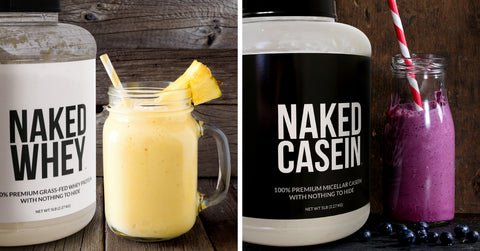
At Naked Nutrition, our Whey and Casein protein powders fulfill and exceed these standards. Our whey is sourced exclusively from small dairy farms in California and Idaho that raise grass-fed, non-GMO cows. We use no artificial sweeteners, flavors or colors. Our products undergo third-party heavy metal testing. And our ingredient lists are short by design, because we believe the fewer ingredients a protein powder has, the better off you are. We think you deserve to know exactly what you're consuming, and we think the best way to prove that is to keep things simple, source responsibly and test rigorously.
If you're currently using a whey protein and you're not sure where it comes from or whether it's been independently tested, it's worth looking into. The whole point of using a protein supplement is to support your health and your training. A product that's introducing heavy metals or unlabeled ingredients into your daily routine isn't doing that, no matter what the label says.