



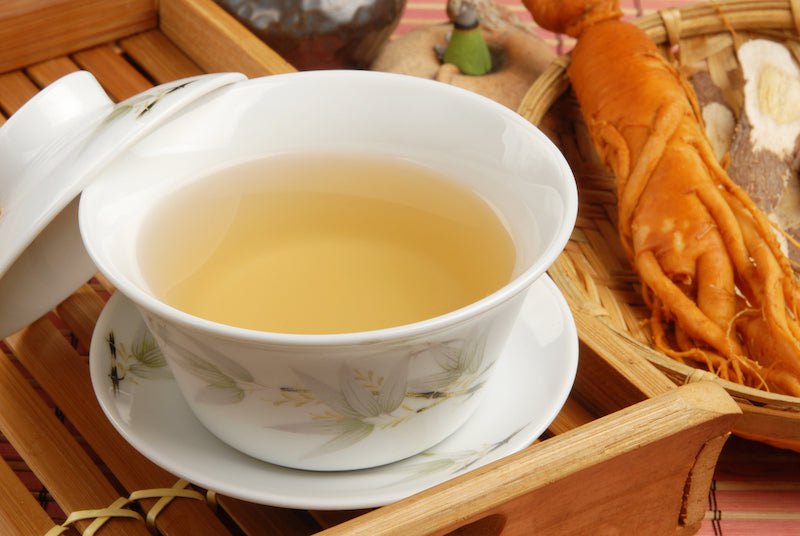

It sounds like just another trendy natural remedy, but ginseng is actually a traditional Chinese herb that’s been around for centuries. It’s a naturally growing root plant, and there are two common types used as herbal supplements.
American ginseng is known to be more calming, while Chinese ginseng, also known as Panax ginseng, has a more stimulating effect.
In this article, we’ll talk about the benefits of Panax ginseng, how it works compared to caffeine, and how you can use it as an alternative to coffee.
Benefits of Panax Ginseng
There’s a reason why this Chinese herb has been around and utilized for hundreds of years. It offers a number of health benefits, thanks to the active compounds ginsenosides and gintonin.
Works against inflammation
Inflammation is to blame for many chronic health conditions, skin conditions, cognitive decline, pain, and even cell damage. Ginseng increases antioxidant activity and fights inflammation.
More research is needed here, but studies have shown that ginseng improves inflammatory markers in athletes, as well as inflammation due to skin conditions like eczema.
Supports brain health

Some research suggests that ginseng may help with mood, memory, alertness, and behavior.
Although some of the mechanisms are unclear, it’s possible that ginseng protects brain cells from free radical damage. Ginseng’s anti-inflammatory properties also improve brain health.
Studies have shown that ginseng is particularly beneficial to brain function and behavior for people with Alzheimer’s disease.
Boosts the immune system
Ginseng may support and strengthen your immune system. Interestingly, a lot of the research on this topic focuses on patients with cancer or another condition that severely compromises the immune system.
You probably noticed a trend by now, but more research is needed to say how exactly ginseng functions in the immune system. However, research on cancer patients does show significant improvement in immunity markers for those taking ginseng consistently.
Increases antioxidant activity
Antioxidants protect the cells from free radicals and damage. Ginsenosides, one of the active compounds of ginseng, has been shown to increase antioxidant activity.
Antioxidants already exist naturally in the body, but eating foods like ginseng that work as antioxidants gives your body extra protection. In fact, one review of several studies states that taking ginseng regularly significantly lowers the risk of developing cancer.
Increases energy

If you’re not a coffee person, try ginseng. Panax ginseng can not only help you fight fatigue, but it can boost your energy in certain situations.
To fight fatigue, ginseng decreases oxidative stress in the cells. The result is less physical and mental fatigue.
Ginseng increases energy production at a cellular level as well. This energy boost in the cells becomes a noticeable boost of energy and possibly improved performance in the gym for you.
Helps with blood sugar control
Ginseng may play a role in keeping your blood sugar stable. This benefit isn’t just for people with diabetes, as even people without diabetes can experience high blood sugar.
The risks of frequently high blood sugar are dangerous. It can cause insulin resistance and increase your risk for diabetes and other conditions.
Taking ginseng seems to benefit all sides of glucose control. It supports cell function in the pancreas, increases the production of insulin in the pancreas, and helps more insulin actually get into the cell.
Panax Ginseng vs. Coffee

You’re probably here because you’re wondering if ginseng is a “healthier” alternative to coffee. And the answer is, it depends.
Coffee isn’t necessarily “unhealthy.” Caffeine is a natural stimulant that is perfectly safe for most people to consume in reasonable amounts.
However, you might choose ginseng over coffee for your own personal preference. Some people find that while coffee spikes their energy levels quickly followed by a crash later, ginseng provides a more steady rise in energy.
Ginseng is also a great choice if you simply don’t like coffee. Some people who fall into this category experiment with products made with synthetic caffeine and plenty of unnecessary additives and sweeteners.
In other words, ginseng may be a healthy alternative if you’re not into coffee but looking for an energy boost.
Is one better than the other? Not necessarily.
In a small study where endurance athletes took either caffeine or Panax ginseng to improve performance, both groups experienced significant improvement in exercise performance measures compared to the placebo group. The results of the ginseng group compared to the caffeine group were very similar.
Adding Ginseng to Your Diet
It’s fairly easy to add ginseng to your diet. You can actually eat ginseng root raw, steamed, or cooked in a soup or stir fry. It has a light, slightly earthy, and sweet flavor.
Ginseng is most often consumed in herbal teas. You can find tea mixtures that already contain ginseng, or you can add fresh ginseng to your tea while it steeps. If you don’t like tea, you can even steep fresh ginseng in plain, hot water for several minutes.
Finally, ginseng is widely available as a supplement. Our energy wellness shot is a supplement containing caffeine from green coffee beans (less jittery than regular roasted coffee), Panax ginseng, and ashwagandha.
Final Thoughts
Panax ginseng isn’t anything new. People have been taking it to help with immunity, brain function, energy, and other health benefits for centuries.
Just like caffeine, Panax ginseng is a natural stimulant. It’s noted to release energy more steadily, which appeals to people who are sensitive to caffeine. It’s also a nice alternative for anyone who doesn’t drink coffee.