




On this page
Can You Take Creatine With Coffee? What You Need to Know
Discover if mixing your morning coffee with creatine is safe, effective, or a habit worth reconsidering.

Key Takeaways
- Safe to combine: Taking creatine with coffee is safe for most healthy adults and does not cause any harmful interactions.
- Caffeine does not cancel creatine: Early concerns that caffeine counteracts creatine have not held up to current research. The two work through different mechanisms and can complement each other.
- Performance benefits are real: Combined creatine and caffeine intake has been shown to increase sprinting speed, VO2 max, and lean body mass when paired with HIIT training.
- Standard dose applies: Use 3–5g of creatine per day regardless of what you mix it with. Coffee does not change the dosage recommendation.
- Hot coffee works fine: Creatine dissolves well in hot coffee, and the acidity does not degrade its effectiveness.
- Timing matters for sleep: Avoid the combination too late in the day — the caffeine, not the creatine, is the primary sleep disruptor.
- Use pure creatine monohydrate: Unflavored, additive-free creatine mixes cleanly into coffee without affecting taste or digestion.

Creatine Monohydrate Powder | Naked Creatine - 2.2LB
- Creatine Monohydrate
- Creatine Formula
- Third-Party Tested
- No Artificial Additives
Can You Take Creatine With Coffee? The Short Answer

Yes, you can take creatine with coffee. For most healthy adults, combining the two is safe, effective, and actually a practical way to build a consistent pre-workout habit. There are no harmful interactions between creatine and caffeine, and emerging research suggests the combination may produce stronger performance benefits than either substance alone.
The question "can you take creatine with coffee" comes up constantly in fitness communities, and it deserves a direct answer before anything else. The concern typically stems from an older study suggesting caffeine might blunt creatine's benefits — but that finding has not held up under broader scrutiny, and the current research consensus is more favorable to the combination than against it.
This article covers how creatine and caffeine interact in the body, what the research actually shows about combining them, practical dosing and timing guidance, how to mix creatine into hot or iced coffee, a ready-to-use recipe, and how to choose a creatine that mixes cleanly without affecting the taste of your cup.
What Happens When You Combine Creatine and Caffeine?

Creatine and caffeine work through entirely different mechanisms, which is part of why they pair well. Creatine increases the body's phosphocreatine stores, allowing faster regeneration of ATP — the primary fuel for muscle contractions during short, high-intensity efforts like sprinting, lifting, or interval training. The more creatine stored in your muscles, the longer they can sustain peak output before fatigue sets in.
Caffeine operates upstream of that process. It blocks adenosine receptors in the brain — adenosine is the neurotransmitter responsible for promoting relaxation and sleepiness. By blocking it, caffeine elevates alertness, reduces perceived effort, and increases adrenaline output. The result is more mental drive and physical energy going into your session.
- Creatine replenishes ATP faster, extending high-intensity muscle output before fatigue.
- Caffeine blocks adenosine receptors, raising alertness and reducing perceived exertion.
- Together, they target both the physical energy substrate (ATP) and the neurological drive to perform.
- Neither mechanism interferes with the other — they operate on separate pathways.
An older study raised the concern that caffeine might constrict blood vessels and reduce nutrient delivery to muscles, potentially offsetting creatine's benefits. The evidence for that mechanism, however, has remained inconclusive, and multiple subsequent studies show no meaningful negative interaction. If anything, the current picture is that combining the two may produce additive or synergistic effects on performance — not a cancellation.
Benefits of Taking Creatine With Coffee

The performance case for combining creatine and caffeine is well-supported. Both substances independently improve exercise output, but research suggests their effects compound when taken together — particularly for high-intensity work.
📊 What Research Says
Studies show that when creatine and caffeine are combined with HIIT training, participants showed measurable improvements in sprinting speed, VO2 max, and lean body mass compared to baseline — suggesting the combination supports both aerobic capacity and body composition simultaneously. (1, 2). A separate controlled trial found that a pre-workout supplement containing both creatine and caffeine was safe and effective at increasing aerobic capacity and muscular strength in healthy male volunteers (3).
Here is what the research and practical experience consistently show when combining the two:
- Improved high-intensity performance: Creatine sustains ATP production during short bursts of effort (weightlifting, sprinting, HIIT), while caffeine raises the neurological ceiling on effort output.
- Reduced fatigue: Caffeine blunts the perception of fatigue, and creatine delays the actual metabolic cause of it — together they let you train harder for longer.
- Enhanced muscular endurance: Studies also support caffeine's role in improving endurance performance, which pairs with creatine's well-documented strength benefits (4).
- Cognitive performance: Both creatine and caffeine have independent evidence for improving focus and mental acuity — a useful benefit for athletes who need sharp decision-making during training or competition.
- Body composition: The combination, particularly alongside HIIT, supports increases in lean body mass — an outcome tied to creatine's effect on muscle protein synthesis and caffeine's influence on fat metabolism.
Individual response will vary. Some people notice a stronger synergy than others, and those with high caffeine tolerance may experience more modest alertness effects. The strength and body composition benefits from creatine, however, are largely independent of caffeine tolerance.
Are There Any Risks to Mixing Creatine and Coffee?

For most healthy adults, combining creatine and coffee carries minimal risk. But there are a few practical considerations worth understanding before you commit to the habit daily.
Dehydration: Both caffeine and creatine have mild diuretic properties — caffeine more acutely so. Creatine also draws water into muscle cells, which increases your baseline hydration needs. The solution is straightforward: drink more water. Aim for at least 2–3 liters per day when using creatine consistently, and don't rely on coffee to meet your fluid intake targets.
Digestive sensitivity: Some people experience stomach discomfort when combining caffeine and creatine, particularly on an empty stomach. If this happens, try taking the combination with a small meal or splitting the creatine dose across the day rather than taking it all at once.
Caffeine tolerance variation: Caffeine affects people differently. Those who are sensitive to it may experience anxiety, elevated heart rate, or restlessness — particularly at higher doses. If you notice these effects, reduce your caffeine intake before adjusting your creatine use, since creatine itself does not cause stimulant-like symptoms.
Who should be cautious: People with high blood pressure, diagnosed heart conditions, or significant caffeine sensitivity should consult a doctor before combining stimulants with any supplement stack. Pregnant individuals should also follow established caffeine guidelines regardless of creatine use.
What not to mix with creatine: Alcohol is the main one to avoid. Both creatine and alcohol affect hydration, and combining them undermines creatine's muscle-building potential while increasing dehydration risk. High-dose energy drinks — which often stack caffeine with other stimulants like synephrine — are also worth avoiding alongside creatine.
How to Take Creatine With Coffee: Dosage, Timing, and Tips

The mechanics of mixing creatine into coffee are simpler than most people expect. The standard creatine dose — 3 to 5 grams per day — applies whether you're mixing it into water, a protein shake, or your morning cup. Coffee does not change the dosage recommendation.
Timing: Take creatine and coffee 30 to 60 minutes before your workout for the best performance effect. Both substances absorb reasonably quickly, and this window allows creatine to enter circulation and caffeine to reach peak blood levels before your session starts.
Hot coffee: Creatine dissolves well in hot coffee — better than in cold water, in fact. Heat increases solubility, so stirring creatine into a hot cup works cleanly. The acidity of coffee does not degrade creatine or reduce its effectiveness. This is a common concern, and the evidence does not support it.
Iced coffee or cold brew: Creatine dissolves less readily in cold liquid. If you prefer cold coffee, dissolve the creatine in a small amount of warm water first, then add it to your cold brew. This prevents clumping and ensures an even distribution.
Creatine in coffee vs. water: Both are equally effective. Creatine's bioavailability is not meaningfully altered by the vehicle you use to consume it. Use whichever you'll drink consistently — consistency is what drives results with creatine, not the choice of liquid.
Sleep: Avoid taking the combination late in the day. The concern here is caffeine, not creatine. Caffeine has a half-life of roughly five to six hours, meaning an afternoon cup can still be affecting your sleep at midnight. Creatine itself does not appear to disrupt sleep when taken at appropriate doses.
Creatine and Coffee Recipes: From Simple to Shake

If you want the simplest possible approach, the basic creatine coffee takes about ten seconds to make. For something closer to a meal replacement or a more substantial pre-workout, the mocha shake below covers both caffeine and protein in one go.
Option 1: Basic Creatine Coffee (Quick)
- 1 cup freshly brewed coffee (hot or iced)
- 3–5g creatine monohydrate powder
Stir creatine directly into hot coffee until fully dissolved. For iced coffee, pre-dissolve in two tablespoons of warm water before adding. No sweetener needed — pure creatine monohydrate is flavorless and won't affect the taste of your coffee.
Option 2: Mocha Creatine Protein Shake (Pre-Workout Meal)
- 1 scoop creatine monohydrate powder
- 1 scoop Chocolate Naked Whey
- 1 tsp vanilla extract
- 1 tbsp instant espresso
- 1 cup unsweetened almond milk
Blend all ingredients until smooth. Drink 30 to 60 minutes before training.
Approximate macros per serving: ~160–180 calories, 25g protein, 5–7g carbohydrates, 3–4g fat (varies by exact protein scoop size and almond milk brand).
One note on ingredients: if you're going to mix creatine into coffee every day, use a creatine with no fillers, artificial flavors, or added sugars. Some flavored creatines contain sweeteners or additives that turn your coffee into something that tastes like a candy bar — and compounds over time in ways that aren't always welcome at 6am. Unflavored creatine monohydrate mixes in without altering the flavor at all.
Choosing the Right Creatine to Mix With Coffee
Not all creatine supplements are the same, and the form you choose matters more when you're mixing it into a daily beverage like coffee. Creatine monohydrate is the most studied and validated form available. Hundreds of published studies document its safety and efficacy for strength, power output, muscle mass, and recovery. No other form of creatine has a comparable research base.
- More clinical trials than any other creatine form — results are consistent and replicable.
- Bioavailability is high and well-understood; the body absorbs and stores it efficiently.
- Unflavored monohydrate is tasteless, making it the cleanest option for mixing into coffee.
- Cost-effective — you're paying for the active compound, not a proprietary blend or marketing premium.
Purity matters when you're adding creatine to coffee daily. Flavored creatines, proprietary blends, and products with artificial sweeteners or added dyes can affect the taste of your coffee and introduce unnecessary compounds into your daily routine. An unflavored, single-ingredient creatine monohydrate dissolves cleanly, doesn't alter the flavor of your cup, and keeps your supplement stack straightforward.
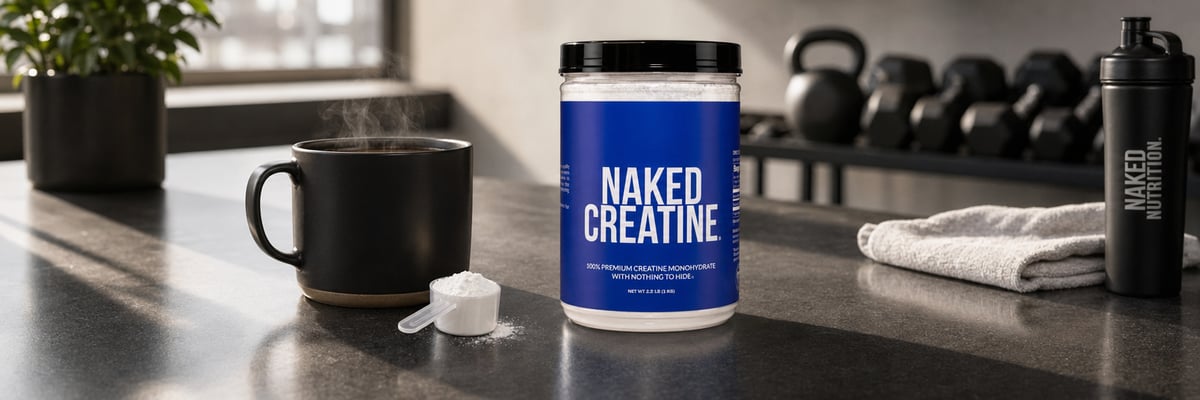
Naked Creatine is pure creatine monohydrate with no additives, fillers, or artificial ingredients — one ingredient, nothing else. It dissolves well in both hot and cold liquids and won't change the taste of your coffee. If you're building a daily creatine-coffee habit, that simplicity compounds in your favor over time.
If you're still deciding between creatine forms, the purity and research profile of monohydrate makes it the default choice for anyone who isn't working with a specific clinical reason to use a different form. Once you've committed to monohydrate, the only variable left is consistency — and mixing it into a daily cup of coffee is one of the most reliable ways to build that.
Frequently Asked Questions
Can you take creatine with coffee?
Yes, you can take creatine with coffee without any significant safety concerns. While early research suggested caffeine might interfere with creatine's benefits, more recent studies indicate that combining the two does not meaningfully reduce creatine's effectiveness for most people.
Does caffeine cancel out the effects of creatine?
The idea that caffeine cancels out creatine largely stems from a single older study, and subsequent research has not consistently replicated that finding. Most sports nutrition experts now agree that moderate caffeine intake alongside creatine supplementation does not negate creatine's well-documented performance and muscle-building benefits.
Will mixing creatine into hot coffee affect its potency?
Creatine monohydrate is relatively stable in warm liquids for short periods, so stirring it into your morning coffee and drinking it immediately is generally fine. Avoid letting creatine sit in hot or acidic liquid for extended periods, as prolonged exposure to heat and acidity can begin to degrade it into creatinine, a waste byproduct.
What is the recommended daily dosage of creatine?
The most widely supported maintenance dose is 3–5 grams of creatine monohydrate per day, which is sufficient to keep muscle creatine stores saturated over time. Some protocols include a loading phase of 20 grams per day (split into four doses) for the first 5–7 days to rapidly saturate muscles, though this step is optional.
Is it safe to combine creatine and caffeine every day?
For healthy adults, daily use of both creatine and caffeine is considered safe when consumed in reasonable amounts. Staying well-hydrated is especially important, as both substances can contribute to fluid shifts in the body — aim for at least 8–10 glasses of water per day when supplementing with creatine.
When is the best time to take creatine with coffee?
Timing flexibility is one of creatine's advantages — consistent daily intake matters far more than the exact time you take it. Many people find it convenient to mix creatine into their morning coffee as part of their routine, while others prefer taking it pre- or post-workout alongside their usual caffeine intake.
Does Naked Nutrition's creatine contain any additives or fillers?
Naked Creatine contains only one ingredient — 100% pure creatine monohydrate — with no additives, fillers, artificial flavors, or sweeteners. It is also third-party tested, non-GMO, and free from major allergens, making it easy to stack with other supplements like your daily coffee without worrying about hidden ingredients.
How long does it take to see results from creatine supplementation?
Most people notice improvements in strength, power output, and exercise performance within 2–4 weeks of consistent daily supplementation at the standard 3–5 gram dose. Those who use a loading protocol may experience faster initial results within the first week, though long-term outcomes are comparable between loading and non-loading approaches.
Top Product Picks
Chosen by 1 million+ customers. Free shipping on orders over $100.
Creatine Monohydrate Powder | Naked Creatine - 2.2LB
$35.99
- ✓ 100% premium creatine monohydrate
- ✓ Highest grade available: fast dissolving and quickly absorbed
- ✓ 5g of creatine per serving
- ✓ No artificial sweeteners, flavors, or colors

Raspberry Lime Creatine HCl Powder | Naked Lean Creatine - 231g
$34.99
- ✓ 750 mg Con-Cret® Creatine HCl
- ✓ Organic prickly pear for natural water balance
- ✓ Highly potent: superior muscle performance at lower doses
- ✓ Critical electrolytes for optimal creatine absorption

Lemon Lime Creatine Monohydrate Powder | Naked Creatine - 1.1LB
$29.99
- ✓ 100% premium creatine monohydrate
- ✓ Highest grade available: fast dissolving and quickly absorbed
- ✓ 5g of creatine per serving
- ✓ No artificial sweeteners, flavors, or colors