Skip to content

★★★★★ 1,000,000+ Happy Customers

Free Shipping On Orders $99+

Take the quizLink to /en-lt/pages/supplements-quiz

Your cart is empty

Continue shopping or browse the categories below to add items to your cart.

How Pea Protein Can Help Lower High Blood Pressure

How Pea Protein Can Help Lower High Blood Pressure

Pea protein, like other plant-based protein powders, is largely under-appreciated. In truth, pea protein is not only an excellent source of protein, it also offers all sorts of other benefits. It is, after all, taken from peas. Which are vegetables. And vegetables are good for you.


Although we tend to only pay attention to the body-composition benefits of proteins, these supplements often contain tons of different compounds that can help us in a variety of ways.


Recent research, for example, suggests that pea protein powder could help lower high blood pressure and even improve your overall cardiovascular health.


Power of Pea Proteins


A 2011 study published in the Journal of Agricultural and Food Chemistry, tested the impact of pea protein powder on both hypertensive rats and humans. In both cases, pea protein powder showed a marked decrease in the subjects' blood pressure within just four hours of taking the supplement.


An earlier, 2005 study, looked more generally at plant proteins and their relationship to cardiovascular health. According to that study, replacing animal proteins with plant proteins can greatly reduce the risks of coronary heart disease.


Closeup of a big group of peas


What's Going On?


But how does this work? What's so special about pea protein powder when it comes to high blood pressure? The key seems to rest with a particular peptide – a small grouping of amino acids – found in pea protein powder.


It's important to realize, though, that peptides are both chemically and structurally different than proteins. Still, the peptide is bound up in protein supplements. The exact mechanisms at work here are still not fully understood.


It does seem, however, that these peptides have a powerful impact on the renin-angiotensin system – a biological system that regulates your blood pressure. By influencing the release of both renin and angiotensin, pea peptides work to quickly and effectively reduce blood pressure.


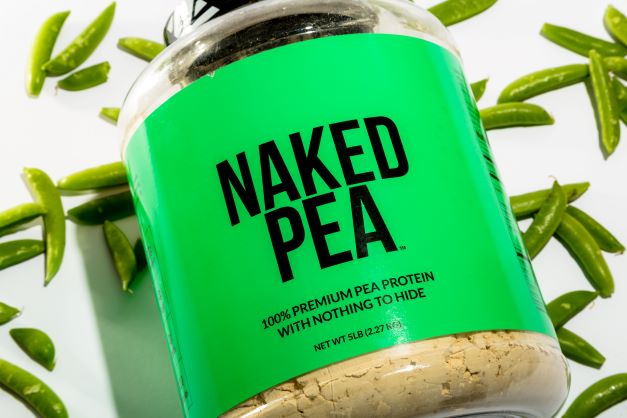
Naked Pea product image with a tub of Unflavored Naked Pea on it's side with loose pea protein powder around it


Just One Note...


So, couldn't you just eat peas? Not if your primary reason is to lower your blood pressure, no. In its natural state, the vegetable simply does not contain enough of the peptides in a bioavailable state to be useful.


You'd have to consume a ridiculous number of peas just to get a small amount of the peptides. And most of them still would not be useable by your body.


In order to capitalize on this unique benefit of peas, you have to take them in the form of pea protein powder.

Related Articles

Best Protein Powder to Mix With Coffee

If you want to increase your protein intake, squeezing it in during snacks and meals can sometimes feel a bit much. Thankfully, protein powders exist but they aren’t always easy to incorporate, especially if you are new to making your own shakes.  Enter protein coffee, aka Proffee. This new trend involves incorporating a protein powder or shake into your morning...

Link to theBest Protein Powder to Mix With Coffeearticle

Best Protein Powder for Children: Evidence-Based Safety Guide for Parents 2025

The bottom line: Research shows that no single protein powder is universally "best" for children, but several safe and effective options include milk-based, soy protein hydrolysate, amaranth, and fish-derived proteins.  The optimal choice depends on your child's individual allergies, nutritional needs, and health status. Always consult your pediatrician before introducing protein supplements to your child's diet [1, 2, 3, 4]....

Link to theBest Protein Powder for Children: Evidence-Based Safety Guide for Parents 2025article

Is Organic Whey Protein Healthier? Evidence-Based Analysis 2025

The bottom line: Current research shows no significant health advantages of organic whey protein over conventional forms. Both types provide identical muscle-building, metabolic, and recovery benefits that make whey protein valuable for health and performance [1, 2]. **Disclaimer: This article is for informational purposes only and does not constitute medical or nutritional advice. Always consult a qualified healthcare provider or...

Link to theIs Organic Whey Protein Healthier? Evidence-Based Analysis 2025article

What Are the Common Side Effects of Whey Protein? Complete 2025 Safety Guide

While there is the generic worry of supplements causing negative reactions, is whey protein really much of a concern? In this article, we look at the possible side effects.

Link to theWhat Are the Common Side Effects of Whey Protein? Complete 2025 Safety Guidearticle