



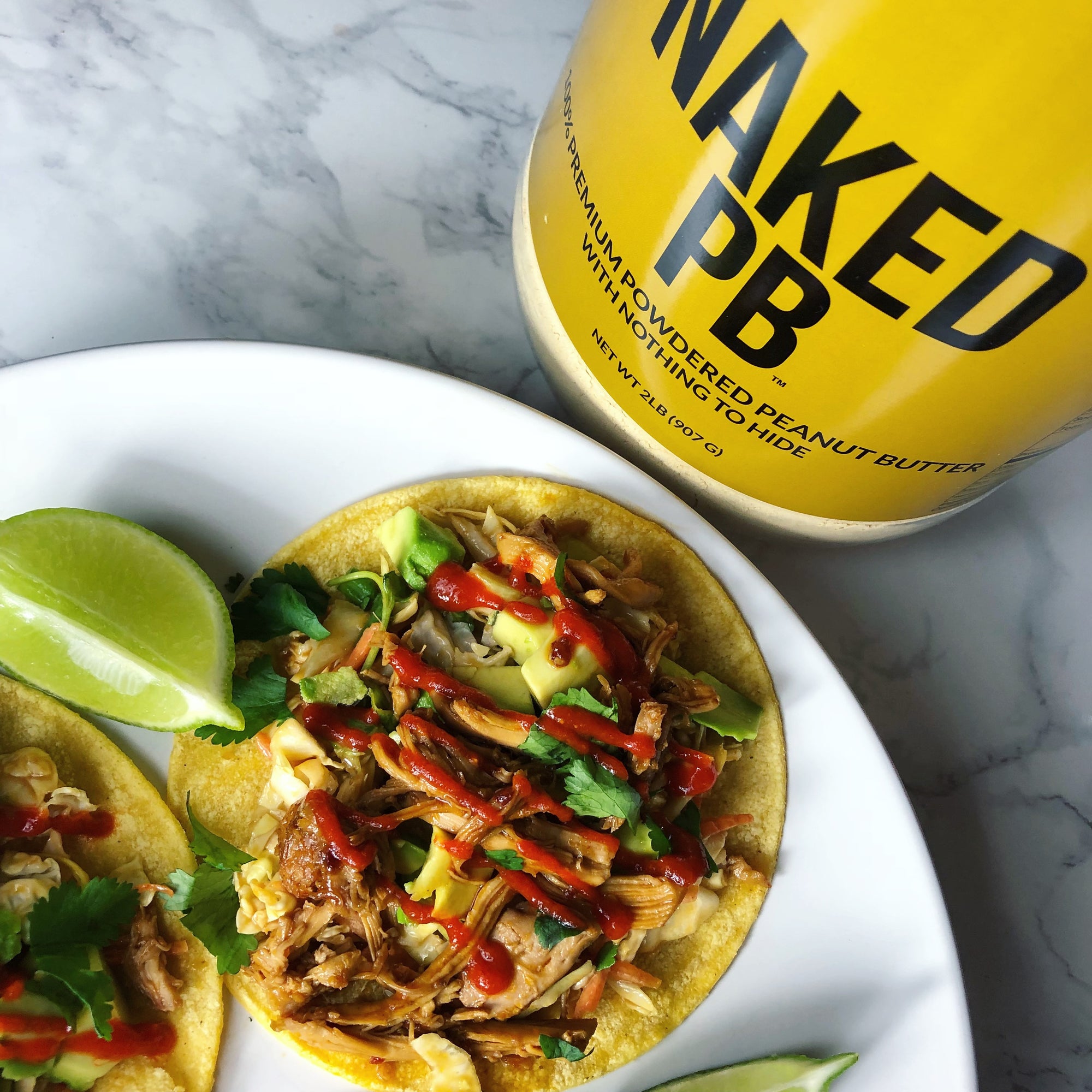
Powdered peanut butter is a spin on the classic peanut butter many of us love.
Although it’s not spreadable like regular creamy or chunky PB, it can be utilized in many other ways.
Plus, the number of calories and fat in powdered peanut butter is significantly less than regular peanut butter. This makes it a great option for individuals looking to reduce their calorie and fat intake.
What is powdered peanut butter?

Powdered peanut butter is exactly how it sounds, peanut butter in a powdered form. When regular peanut butter is made, it is ground down so the natural oils release allowing for a smooth, thick spread.
How is powdered PB made?
Powdered peanut butter is made from roasted and pressed peanuts which removes most of the oil, and then is ground into a fine powder.
You can reconstitute powdered peanut butter to a paste form by adding in water, but don’t expect it to be just like the jarred peanut butter you’re used to.
Without fat, you won’t get the creamy texture but rather a paste.
What are the benefits of powdered peanut butter?

Not only is the consistency of powdered peanut butter different from your standard PB, but the nutrition content is too.
Powdered peanut butter calories are reduced by practically 75% and nearly all of the fat has been removed.
According to FoodData Central, the nutritional content of 2 tablespoons of a popular peanut butter brand includes:
- Total calories – 190
- Fat – 16 grams
- Carbohydrates – 7 grams
- Protein – 7 grams
2 tablespoons of our powdered peanut butter has a nutrition content of:
- Total calories – 50
- Fat – 1.5 grams
- Carbohydrates – 4 grams
- Protein – 6 grams
Sometimes powdered peanut butter products add additional salt and sugar to improve the taste since it lacks most of the oil that gives it a rich flavor.
Naked PB only contains one ingredient, which is roasted peanuts. No other additives necessary.
Powdered peanut butter can also be a beneficial option for individuals who are at high risk of choking, including children or elderly.
What’s the best way to eat powdered peanut butter?

If you’re an avid cook, powdered PB may be a beneficial addition to your pantry. It adds the peanut flavor that can be mixed more easily with liquids than regular peanut butter.
It could even be used as a dry seasoning.
Some other ways to use powdered peanut butter include:
- Mixing in oatmeal
- Stirred into batters, like pancakes or waffles
- Creating sauces and soups
- Combined with flour to dredge meat
- Blended in shakes or smoothies
-
PB smoothie recipe

Any time you use regular peanut butter for your smoothies, try out powdered peanut butter instead. It gives you all the flavor and protein without the additional calories.
Here’s a smoothie recipe for you to try:
- 2 large overripe bananas, peeled, sliced, and frozen
- 1 cup milk (or more to thin as desired)
- 1 scoop Naked PB
- 2 tbsp. unsweetened cocoa powder
- ½ tsp. vanilla extract
- Ice (as needed)
All you need to do is add all of your ingredients to a blender and process until it’s thoroughly combined and has the consistency you desire.
-
PB muffin recipe

Here’s a simple muffin recipe you can try. It makes 12 standard sized muffins.
The ingredients include:
- 1 cup flour
- 1 cup Naked PB
- 1/3 cup granulated white sugar
- 1 tsp. baking soda
- ½ tsp. cinnamon
- ½ tsp. baking powder
- ¼ tsp. salt
- ¾ cup fat-free plain Greek yogurt
- 1 egg, beaten
- ½ tsp. vanilla extract
- 1 cup mashed overripe banana (around 2 large bananas)
- ¼ cup chopped peanuts
Instructions are as follows:
- Preheat the oven to 375 degrees. Line or spray a muffin tin.
- In a large bowl, combine the flour, powdered peanut butter, sugar, baking soda, cinnamon, baking powder, and salt. Mix well.
- In a medium-large bowl, add yogurt, eggs, and vanilla extract. Add 1 cup water and whisk until combined.
- Add wet mixture to dry mixture and stir until uniform and thick.
- Stir mashed banana and 2 tbsp. peanuts into the batter. Even distribute batter among the cups of the muffin pan.
- Evenly sprinkle the remaining 2 tbsp. peanuts over the top. Bake until a toothpick inserted into the center of a muffin comes out clean, around 20 to 22 minutes.
Final thoughts
If you love peanut butter, powdered peanut butter will make a great alternative if you’re looking to have easy bendability into recipes without the additional calories and fat.
Just be sure to choose a product that doesn’t have unnecessary amounts of added sugar and salt, like Naked PB that contains the only ingredient you need – roasted peanuts!