




On this page
What Happens When You Stop Taking Creatine: The Truth
Your muscles won't shrink overnight, but here's exactly what your body goes through when you quit creatine for good.

Key Takeaways
- No dramatic muscle loss: Stopping creatine does not erase the muscle you built. True muscle tissue gained through resistance training stays put as long as you keep training and eating enough protein.
- Water weight drops first: The most immediate change is a loss of 2 to 4 pounds of intracellular water weight, which is why your muscles may look slightly less full.
- Performance dips are temporary: High-intensity output decreases modestly as phosphocreatine stores decline, but your body returns to its natural baseline within 4 to 6 weeks.
- Stopping is completely safe: You don't need to taper, cycle, or follow a protocol. You can stop at any time without harm.
- Your body resumes normal production: The liver and kidneys synthesize creatine naturally. Supplementation just tops off what diet and endogenous production already provide.

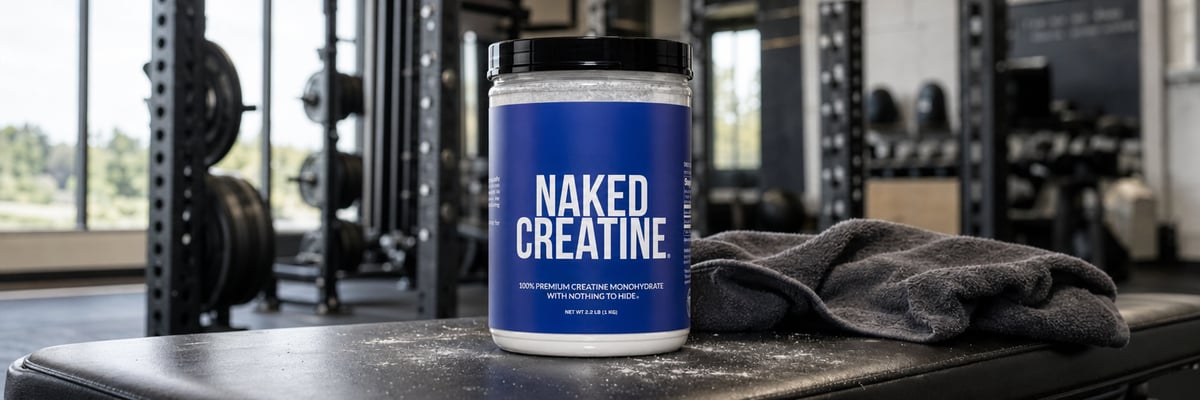
Creatine Monohydrate Powder | Naked Creatine - 2.2LB
- Free Shipping Included
- Creatine Monohydrate
- Creatine Formula
- Evidence-Based Formulas
What Happens When You Stop Taking Creatine? The Short Answer
You've been taking creatine consistently for months, your lifts are up, your muscles look fuller, and now you're wondering what happens if you stop. The short answer: less than you probably fear, and nothing that can't be managed.
When you stop taking creatine, your body gradually depletes its elevated phosphocreatine stores over the course of four to six weeks. During that window, you'll likely notice a small drop in body weight from water loss, a modest reduction in high-intensity performance, and muscles that look slightly less pumped. What you won't experience is a sudden collapse in strength or a reversal of the muscle you worked hard to build.
The changes are real but manageable. Creatine amplifies what training does. It doesn't replace training. So when the supplement leaves your system, your training-driven adaptations stay.
📊 What Research Says
A meta-analysis of creatine supplementation studies found that creatine increased muscle strength by an average of 8% and added an average of 1.4 kg (3.1 lbs) of lean mass compared to placebo groups. The majority of that lean mass gain is tied to increased intramuscular water, which explains why body weight and muscle fullness decrease after stopping, while actual fiber-level hypertrophy remains.
How Creatine Works in Your Body

Creatine isn't a foreign substance your body has no relationship with. Your liver and kidneys synthesize roughly 1 to 2 grams of creatine per day from the amino acids glycine, arginine, and methionine. You also get creatine from food: red meat and fish are the richest dietary sources, providing approximately 1 to 2 grams per pound of raw meat. Creatine is stored primarily in skeletal muscle (about 95%) with the remainder found in the brain, heart, and other tissues.
Its primary job is fueling the phosphocreatine energy system. During high-intensity efforts lasting 1 to 10 seconds — a heavy squat, a sprint, an explosive jump — your muscles burn through ATP almost instantly. Phosphocreatine donates a phosphate group to regenerate ATP, extending your capacity to maintain peak power output before you tip into slower, fatigue-producing energy systems.
- During explosive efforts, muscles deplete ATP in seconds. Phosphocreatine rapidly donates a phosphate group to regenerate ATP and extend peak power output.
- Creatine supplementation saturates muscle stores beyond what diet and endogenous production alone can achieve, giving you a larger phosphocreatine reservoir to draw from.
- A review of 61 studies confirmed that creatine supplementation meaningfully improves performance in tasks requiring maximal strength, power, and sprint capacity.
- Creatine also supports brain energy metabolism, which is why some research connects supplementation to improvements in cognitive performance under stress or sleep deprivation.
Supplementation simply loads your phosphocreatine stores beyond the dietary and endogenous baseline. That's why effects are most pronounced during high-intensity, short-duration work and much less relevant for steady-state cardio or endurance events.
What Changes When You Stop Taking Creatine

Stopping creatine triggers a predictable sequence of changes. None are dangerous. Here's what actually happens, broken down by category.
Water Weight LossCreatine draws water into muscle cells through osmosis. This is intracellular water retention, not the subcutaneous bloat associated with high sodium intake. Research published in the Journal of Strength and Conditioning Research found that creatine supplementation increases the amount of water held in the muscles by approximately 3 pounds, with most of that increase concentrated inside the muscle fibers themselves. When you stop, that water exits. Expect to lose 2 to 4 pounds over one to two weeks. Your muscles will look slightly less full. This is not fat loss or muscle loss.
Performance and High-Intensity EnergyAs your phosphocreatine stores decline back toward baseline, you'll notice a reduction in power output during short, explosive efforts. Sprint times, peak power on a Wingate test, and one-rep-max numbers may tick down modestly. The reduction is not catastrophic. Studies tracking phosphocreatine content after stopping supplementation show that stores return to pre-supplementation levels over four to six weeks, meaning the performance gap narrows gradually rather than dropping off a cliff.
Muscle Fullness and SizeThe visual change in muscle size after stopping is almost entirely explained by water efflux, not fiber atrophy. The underlying muscle tissue remains. Fullness returns to your natural non-supplemented state, which may feel like a noticeable change if you've been supplementing for months.
StrengthModest reductions in maximal strength and power are possible, particularly in activities that rely heavily on the phosphocreatine system. Trained muscle, however, retains its neurological and structural adaptations from resistance training. Your strength baseline won't reset to where it was before you started lifting.
Cognitive EffectsCreatine plays a role in brain energy metabolism, and some research suggests supplementation supports cognitive function, particularly under conditions of fatigue or sleep deprivation. Stopping supplementation may reduce this benefit, though the cognitive effect of creatine is a relatively newer area of research compared to its performance applications.
Will You Lose the Muscle You Gained on Creatine?

This is the question that keeps most people from stopping. The fear is understandable: you put in months of work, and the idea of watching it disappear is demoralizing. The evidence, however, is reassuring.
Creatine does not build muscle by itself. It creates conditions where training is more productive. The actual muscle tissue, the myofibrillar proteins and structural adaptations built through progressive resistance training, is not creatine-dependent. Those adaptations require a training stimulus and sufficient protein to develop, and they require a lack of training stimulus and insufficient protein to reverse. Stopping creatine changes neither of those variables.
Studies have consistently shown that resistance training alone produces significant gains in muscle mass and strength without any creatine supplementation at all. The gains you made while on creatine reflect your training adaptation, not a creatine-induced state that evaporates when you stop.
What you will lose is the water weight held inside the muscle cells. Muscles will look slightly smaller and feel less full. That part is real. But it's cosmetic, not structural. The practical guidance here is straightforward:
- Keep your training intensity and volume consistent after stopping.
- Maintain adequate protein intake to support muscle protein synthesis.
- Accept that the scale will drop 2 to 4 pounds and that this reflects water, not lost tissue.
If you do both of those things, your actual muscle mass stays. The pump might be slightly less dramatic without creatine's water-retention effect, but the muscle underneath it remains.
How Long Does It Take for Creatine to Leave Your System?

Muscle creatine stores don't empty overnight. After you stop supplementing, your body continues to excrete creatine daily as creatinine through urine, which is the same natural turnover process that happens whether you supplement or not. At a typical daily turnover rate of 1 to 2% of total muscle creatine stores, returning to your pre-supplementation baseline takes roughly four to six weeks.
The washout timeline varies based on how you were dosing. If you went through a loading phase (typically 20 grams per day for five to seven days), your stores were maximally saturated and will take longer to deplete than if you were on a steady maintenance dose of 3 to 5 grams per day. The direction is the same either way; the rate differs slightly.
Once supplementation ends, your liver and kidneys resume supplying creatine at their endogenous rate, approximately 1 to 2 grams per day. Dietary intake from meat and fish continues to contribute as well. Your body doesn't enter a creatine-deficient state. It simply returns to the level it maintained before you started supplementing.
The practical implication: don't expect an immediate change in the first week. The most noticeable effects, particularly the water weight loss and the reduction in phosphocreatine-dependent performance, tend to become apparent around weeks two through four as stores gradually decline toward baseline.
When Should You Stop Taking Creatine?

There's no mandatory stopping point. Creatine does not require cycling, and long-term supplementation at standard doses is considered safe for healthy individuals. That said, there are specific situations where stopping makes practical sense.
- Planned deload or training break: If you're taking time away from high-intensity training, the performance benefits of creatine are largely irrelevant during that period. Stopping temporarily is a reasonable choice.
- Weight class competition: Athletes competing in weight-class sports (powerlifting, wrestling, combat sports) sometimes stop creatine in the weeks before a weigh-in to shed the 2 to 4 pounds of water weight. This is a deliberate, strategic decision.
- Gastrointestinal distress: A subset of people experience stomach discomfort, cramping, or nausea with creatine supplementation, particularly at higher doses. Stopping or reducing the dose typically resolves these symptoms.
- Kidney health concerns: Creatine supplementation raises serum creatinine levels, which is a normal metabolic consequence rather than a sign of kidney damage. However, if you have pre-existing kidney disease or impaired renal function, consult a physician before continuing or restarting creatine.
- Shifting training goals: If your focus moves away from high-intensity power and strength work toward endurance, flexibility, or general fitness, creatine's specific benefits become less relevant to your goals.
There is no physiological harm in stopping. No tapering required. No withdrawal effects. You simply stop, and your body handles the rest on its own timeline.
How to Maintain Your Performance After Stopping Creatine

Stopping creatine doesn't mean accepting a permanent step down in performance. The gap between supplemented and unsupplemented performance is real but modest, and it can be narrowed considerably with the right approach.
The single most important factor is keeping your training consistent. Progressive overload drives muscle retention and strength maintenance. If your sessions stay hard, your body has every reason to hold onto the adaptations it built. Don't use stopping creatine as a reason to ease off the intensity.
Protein intake is the other non-negotiable. Muscle protein synthesis requires sufficient amino acid availability. Most active individuals aiming to maintain muscle benefit from protein intakes in the range of 0.7 to 1 gram per pound of body weight per day, though your specific needs depend on training volume, age, and overall caloric intake. A registered dietitian can dial in the right target for your situation.
For performance support beyond the basics, a few supplements have solid evidence behind them:
- BCAAs: Branched-chain amino acids support muscle protein synthesis and can reduce exercise-induced fatigue, making them a reasonable addition when you want to maintain training quality without creatine.
- Beta-alanine: Buffers muscle acidity during sustained high-intensity efforts lasting 60 to 240 seconds. It addresses a different energy system than creatine and complements endurance-style training particularly well.
- Caffeine: Consistently improves power output, endurance, and focus. Not a direct substitute for creatine, but an effective performance tool on its own terms.
If your goals shift back toward maximal strength, power, or adding lean mass, returning to creatine is always an option. The research on creatine is among the most robust in sports nutrition, and restarting supplementation will reload your phosphocreatine stores within one to two weeks at a maintenance dose, or faster with a short loading phase. The door remains open in either direction.
Frequently Asked Questions
What happens to your muscles when you stop taking creatine?
When you stop taking creatine, your muscle creatine stores gradually deplete over the course of two to four weeks, returning to their natural baseline levels. As those stores drop, your muscles may lose some of the water they were retaining, which can result in a noticeable but temporary reduction in muscle size and fullness. Any actual muscle mass you built while supplementing will largely remain intact as long as you continue training and eating enough protein.
Will you lose strength after stopping creatine?
You may experience a modest decrease in strength and power output once your creatine stores return to baseline, since creatine plays a key role in rapidly regenerating ATP during high-intensity efforts. However, the strength gains you achieved through consistent training are not erased — they are the result of neural adaptations and muscle tissue growth that persist beyond supplementation. Maintaining a structured workout program is the most important factor in preserving your strength long-term.
How long does creatine stay in your system after you stop taking it?
After discontinuing creatine supplementation, your muscle creatine phosphate levels typically return to their natural baseline within approximately two to four weeks. The exact timeline can vary depending on how long you were supplementing, your training intensity, and your individual metabolism. Creatine itself is not stored indefinitely — your body continuously breaks it down into creatinine, which is filtered out through the kidneys and excreted in urine.
Is the weight you lose after stopping creatine real fat or water?
The weight loss that occurs after stopping creatine is almost entirely water weight, not fat loss. Creatine draws water into muscle cells through osmosis, so elevated creatine stores are associated with increased intramuscular water retention — when those stores drop, that water is released. This means the scale may go down by one to three pounds, but your body fat percentage is unlikely to change as a direct result of quitting creatine.
Do you need to cycle off creatine, or is it safe to take long-term?
Creatine does not need to be cycled, and research consistently supports its safety for long-term, continuous use in healthy individuals. Studies spanning several years have found no adverse effects on kidney function, liver health, or other key health markers in people without pre-existing conditions. If you have concerns about long-term supplementation, consulting a healthcare professional is always a good precaution, but cycling off creatine is a personal preference rather than a medical necessity.
Will stopping creatine affect my workout performance right away?
You are unlikely to notice an immediate drop in performance on the first day or two after stopping creatine, since your muscle stores do not deplete instantly. Most people begin to perceive a difference in their high-intensity performance — such as reduced endurance on heavy sets or slightly less explosive power — after about one to two weeks as stores continue to decline. The effect is typically subtle rather than dramatic, especially if your diet includes natural creatine sources like red meat and fish.
Can you get enough creatine from food alone without supplementing?
Yes, your body obtains creatine both through dietary sources and by synthesizing it naturally in the liver, kidneys, and pancreas. Red meat, poultry, and fish are among the richest food-based sources, providing roughly one to two grams of creatine per pound of raw meat. However, achieving the research-backed maintenance dose of three to five grams per day through food alone would require eating very large portions of animal protein daily, which is why supplementation is a practical and efficient option for those looking to maximize muscle creatine saturation.
Should you taper off creatine gradually or stop all at once?
There is no scientific evidence suggesting that you need to taper your creatine dose before stopping — you can safely discontinue it all at once without experiencing withdrawal symptoms or negative health effects. Unlike some other supplements or medications, creatine does not cause physiological dependence, so quitting cold turkey simply means your muscle stores will gradually decline back to their natural levels. Whether you stop suddenly or reduce your dose over time, the end result for your creatine stores will be essentially the same.
Top Product Picks
Chosen by 1 million+ customers. Free shipping on orders over $100.
Creatine Monohydrate Powder | Naked Creatine - 2.2LB
$35.99
- ✓ 100% premium creatine monohydrate
- ✓ Highest grade available: fast dissolving and quickly absorbed
- ✓ 5g of creatine per serving
- ✓ No artificial sweeteners, flavors, or colors

Lemon Lime Creatine Monohydrate Powder | Naked Creatine - 1.1LB
$29.99
- ✓ 100% premium creatine monohydrate
- ✓ Highest grade available: fast dissolving and quickly absorbed
- ✓ 5g of creatine per serving
- ✓ No artificial sweeteners, flavors, or colors

Orange Creatine Monohydrate Powder | Naked Creatine - 1.1LB
$29.99
- ✓ 100% premium creatine monohydrate
- ✓ Highest grade available: fast dissolving and quickly absorbed
- ✓ 5g of creatine per serving
- ✓ No artificial sweeteners, flavors, or colors