




On this page
Can You Lose Weight by Stop Taking Creatine? The Truth
Discover what really happens to your body when you quit creatine and whether it can actually help you shed pounds faster.

Key Takeaways
- Scale weight will drop: Stopping creatine causes water weight loss, not fat loss. Most people lose 2–5 lbs of water within a few weeks of stopping.
- Creatine doesn't affect fat metabolism: It has no direct impact on how your body burns fat. A calorie deficit drives fat loss, not supplement status.
- Muscle mass is largely preserved: The gains you built through training stay. Muscles may look flatter without extra water, but actual tissue isn't lost.
- Performance dips temporarily: Creatine phosphate stores take 4–6 weeks to return to baseline after stopping. Expect a short-term reduction in high-intensity output.
- Most people should keep taking creatine during a cut: Creatine supports the hard training that preserves muscle while in a calorie deficit.
- Tracking body composition matters more than scale weight: Photos, measurements, and DEXA scans give a more accurate picture of progress than the number on the scale.

Creatine Monohydrate Powder | Naked Creatine - 2.2LB
- Free Shipping Included
- Creatine Monohydrate
- Creatine Formula
- Evidence-Based Formulas
Will You Lose Weight If You Stop Taking Creatine?
You've been taking creatine, the scale is a few pounds higher than expected, and now you're wondering if dropping the supplement will move things in the right direction. The short answer is yes, your scale weight will likely drop. But here's the part that actually matters: that drop is water, not fat.
Creatine is one of the most researched supplements in sports nutrition. It's a naturally occurring compound produced by your liver, kidneys, and pancreas, and it's stored primarily in skeletal muscle as creatine phosphate. Supplementing with it raises those stores above what diet and natural production can achieve, which improves performance during short, high-intensity efforts like sprinting and heavy lifting.
One side effect of elevated muscle creatine stores is water retention inside the muscle cells. This is an osmotic process, and it's why your weight can tick up 2–5 lbs during supplementation. When you stop taking creatine, those elevated stores decline, water follows, and the scale drops.
Stopping creatine is not a fat loss strategy. The weight you lose is water retained inside muscle cells, and losing it doesn't change your body fat percentage by a single decimal point. If fat loss is the goal, the strategy is a sustained calorie deficit, not supplement management.
This article covers what actually happens to your body when you stop taking creatine, who might genuinely benefit from pausing it, and how to maintain your training progress regardless of which direction you choose.
How Creatine Causes Water Retention (And Why It's Not Fat)

Creatine draws water into muscle cells through osmosis. As creatine concentration inside the muscle rises, water follows to maintain equilibrium. The result is increased intracellular hydration, which contributes to muscle fullness, a slight increase in cell volume, and a measurable uptick in body weight.
This effect is amplified during a loading phase. If you saturate your muscles quickly by taking 20g per day for 5–7 days, water retention happens faster and is more pronounced than with a standard 3–5g daily dose. Research published in the Journal of Athletic Training confirms that creatine supplementation leads to significant increases in total body water, with most of that increase occurring in the intracellular compartment.
- Intracellular retention (creatine-related): water held inside muscle cells, contributes to fullness and performance
- Subcutaneous retention: water held beneath the skin, causes the puffy or "soft" look associated with bloating
- Creatine primarily causes intracellular retention, not the subcutaneous kind that makes you look bloated
- Typical water weight gained during creatine use: 2–5 lbs for most people
- This is not fat. It does not affect body fat percentage or metabolic rate
Your body also produces creatine naturally, roughly 1–2g per day from the liver, kidneys, and pancreas. Supplementation raises muscle stores beyond that baseline, which is what produces the performance benefit and the associated water retention. Neither the water gain nor the water loss when you stop has anything to do with fat tissue.
What Happens to Your Body When You Stop Taking Creatine
When you stop supplementing, your muscle creatine stores gradually decline back toward their natural baseline. This process isn't immediate. Research indicates it takes approximately 4–6 weeks for creatine phosphate levels to fully return to pre-supplementation levels, depending on your training volume and dietary creatine intake from sources like red meat and fish.
During that washout period, water follows creatine out of the muscle cells. Most people notice the scale dropping within the first 1–2 weeks, with the majority of water weight gone by week three or four. The exact amount varies by individual, but 2–5 lbs is the typical range.
Your muscles will look and feel different during this period. Without the extra intracellular water, they appear flatter and less pumped, even at the same level of training. This is purely a visual and volumetric change, not a loss of contractile tissue. The muscle fibers you built are still there.
Performance is the other variable to manage. Creatine phosphate is the fuel source for the ATP-PCr system, which powers the first 6–10 seconds of maximal effort. Without elevated stores, you'll likely notice reduced output on heavy lifts, sprints, and any high-intensity interval work. This is temporary. Most trainees find their performance stabilizes within 4–6 weeks as the body adapts to working without the supplemental advantage.
The net result after the washout period: lower scale weight (water), slightly less visual muscle fullness, temporarily reduced peak output, and the same underlying muscle mass you earned through training.
Does Stopping Creatine Actually Help You Lose Fat?

No. Stopping creatine does not cause fat loss. Creatine has no meaningful effect on fat metabolism, lipolysis, or caloric expenditure. The mechanism simply doesn't exist. When you stop and the scale drops, every pound of that reduction is water, and your body fat percentage is unchanged.
Fat loss has one governing principle: you need to consume fewer calories than you expend over a sustained period. Creatine has no bearing on that equation in either direction, at least not directly.
📊 What Research Says
A review published in the Journal of Sports Science and Medicine found that creatine supplementation combined with resistance training produced greater gains in lean mass compared to training alone, without significant increases in body fat. Creatine supports the training quality that reshapes body composition over time. Removing it removes that advantage.
There's also an indirect argument for keeping creatine during a fat loss phase. When you're in a calorie deficit, your training capacity naturally takes a hit. Creatine helps offset that by maintaining output during high-intensity work, which helps preserve muscle mass while you're losing fat. Dropping creatine while cutting means you're simultaneously reducing fuel for performance and cutting calories. That combination makes it harder to retain lean tissue.
If the scale is the problem, understand what the number actually represents. A 3 lb difference in water weight is not meaningful progress toward a fat loss goal. Body composition metrics, tape measurements, progress photos, and DEXA scans tell you what's actually changing. The scale tells you how much you weigh, including water, food, muscle, and fat all at once.
Should You Stop Taking Creatine to Lose Weight?

The answer depends entirely on your actual goal. "Lose weight" means something different depending on who's asking, and creatine's role shifts accordingly.
If you're focused on fat loss and body composition: Keep taking creatine. It supports the training intensity required to preserve muscle while in a deficit. The water weight it adds is cosmetically minor and metabolically irrelevant to fat loss progress.
If you're an athlete cutting weight for a weight-class sport: A temporary pause makes sense. If you need to hit a specific number on a scale for a competition weigh-in, losing 2–5 lbs of water weight by stopping creatine is a legitimate short-term strategy. Restart after the weigh-in.
If your concern is aesthetic before an event: Some athletes and physique competitors stop creatine in the weeks before a competition or photo shoot to reduce water retention and improve muscle definition. This is a valid tactical choice for a specific short-term window, not a long-term weight management strategy.
Before stopping entirely, consider these alternatives that reduce water retention without sacrificing the performance benefit:
- Skip the loading phase: Taking 3–5g daily instead of loading with 20g produces the same long-term muscle saturation with less acute water retention.
- Lower the dose: Some people find that 2–3g daily maintains most of the benefit with a smaller water retention effect.
- Stay hydrated: Adequate hydration actually helps the body regulate fluid balance more efficiently, not less.
- Consider micronized creatine: Micronized creatine monohydrate has a smaller particle size that dissolves more readily and may cause less gastrointestinal discomfort, though the water retention mechanism is the same.
The decision framework is simple: if water weight on the scale is genuinely impacting your goal (a weigh-in, a shoot, a race weight), pause creatine. If your goal is actual fat loss and body composition, there's no rational reason to stop.
How to Maintain Your Progress After Stopping Creatine

The gains you built while supplementing don't disappear when you stop. Creatine was a tool that helped you train harder. The muscle tissue itself was built by the training. Keeping that muscle requires continuing the training, not the supplement.
Prioritize progressive resistance training. This is the single most important factor for retaining lean mass during a cut or after stopping creatine. Muscles need a consistent mechanical stimulus to stay. Drop the intensity or volume significantly, and muscle loss follows regardless of what supplements you're taking.
Protect muscle with protein. Aim for 0.7–1g of protein per pound of bodyweight daily, particularly when in a calorie deficit. Protein provides the amino acids needed for muscle protein synthesis and helps preserve lean tissue when overall calories are reduced. Research in the American Journal of Clinical Nutrition consistently shows that higher protein intakes protect lean mass during energy restriction.
Adjust your performance expectations short-term. During the 4–6 week washout period, your peak output on high-intensity work will be slightly reduced. Don't interpret this as permanent regression. Manage training loads appropriately and avoid chasing PRs during the transition period.
For tracking, shift away from daily scale weigh-ins toward metrics that capture body composition directly:
- Weekly tape measurements at the waist, hips, arms, and thighs
- Monthly progress photos under consistent lighting and conditions
- DEXA scans every 3–6 months for precise lean mass and fat mass data
If your short-term goal (a competition, an event) has passed, seriously consider restarting creatine. The performance and muscle preservation benefits are well-documented, and there's no evidence of harm from long-term use in healthy individuals.
Naked Creatine: Supporting Your Goals On or Off the Supplement
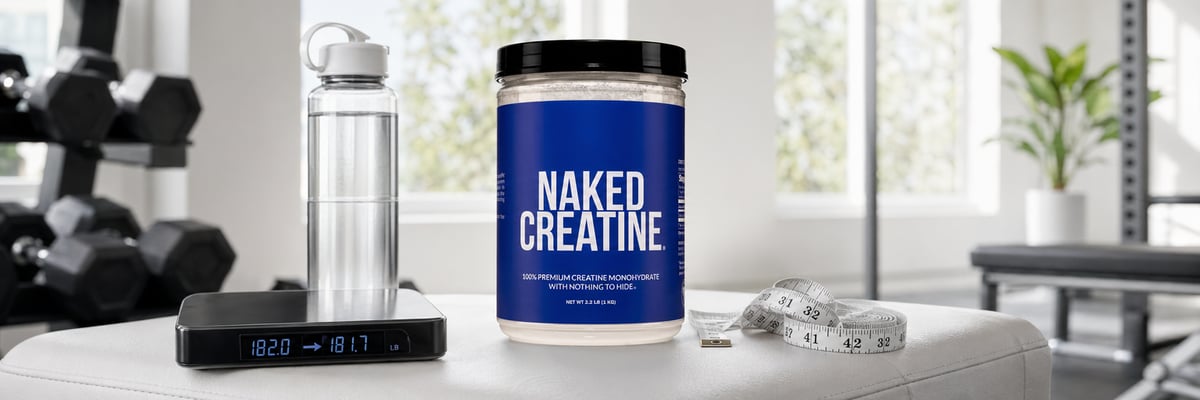
If you decide creatine fits your goals, the product you choose matters. Naked Nutrition's Naked Creatine is 100% pure creatine monohydrate. One ingredient. No fillers, no artificial flavors, no proprietary blends obscuring the dose. What's on the label is what's in the bag.
Creatine monohydrate is the most researched form of creatine available. Decades of clinical trials have established its safety profile and confirmed its effectiveness for increasing muscle creatine phosphate stores, improving high-intensity performance, and supporting lean mass gains when combined with resistance training. Naked Creatine delivers the same form used in that research without unnecessary additives.
Third-party testing ensures that what's on the label matches what's in the product. For athletes subject to drug testing or anyone who wants verified purity, that matters.
- Most extensively studied form across hundreds of clinical trials
- Proven to increase muscle creatine phosphate stores by 20–40% above baseline
- No credible evidence that alternative forms (HCL, ethyl ester, buffered) outperform monohydrate
- Cost-effective and stable; does not degrade quickly in water or with heat
- Safe for long-term use in healthy adults with no evidence of kidney or liver harm at standard doses
Creatine doesn't add fat. It supports the high-intensity training that changes body composition. For anyone in a calorie deficit trying to hold onto muscle while losing fat, that's exactly the kind of support worth keeping in your stack.
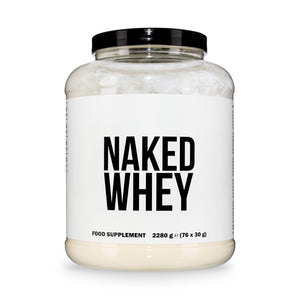
Pair Naked Creatine with a high-quality protein powder during a cut to cover both bases: the performance support from creatine and the amino acid supply from protein. Naked Whey and Naked Casein are single-ingredient options with no artificial anything, designed to complement a clean supplement approach.
If your goal is a leaner, stronger physique, the combination of consistent training, adequate protein, a controlled calorie deficit, and creatine monohydrate is one of the most evidence-backed approaches available. Stopping creatine to lose weight skips the actual mechanism of fat loss and removes a tool that makes the process more effective.
Frequently Asked Questions
Will I lose weight when I stop taking creatine?
When you stop taking creatine, you may notice a drop in scale weight of 2–5 pounds within the first one to two weeks. This weight loss is primarily due to the loss of water that creatine draws into your muscle cells — it is not fat loss. Your actual body fat levels are unlikely to change simply from stopping creatine supplementation.
How long does it take for creatine to leave your system after stopping?
After you stop taking creatine, your body's creatine stores typically return to their baseline levels within four to six weeks. During this time, your muscles gradually release the stored creatine and the associated water, which is why you may notice a gradual reduction in muscle fullness or scale weight. Individual timelines can vary based on muscle mass, diet, and physical activity levels.
Is the weight lost after stopping creatine actual fat loss?
No — the weight you lose after stopping creatine is almost entirely water weight, not body fat. Creatine causes muscles to retain fluid through a process called osmosis, and when creatine stores deplete, that fluid is released. To lose actual body fat, you need to maintain a caloric deficit through diet and exercise, regardless of whether you are taking creatine or not.
Will stopping creatine cause me to lose muscle mass?
Stopping creatine will likely cause your muscles to appear slightly smaller or less full due to the loss of intramuscular water, but this does not mean you are losing actual muscle tissue. However, if creatine was helping you train harder and lift heavier, you may notice a gradual decline in workout performance over time, which could indirectly impact muscle retention. Maintaining consistent training and adequate protein intake is the best way to preserve lean muscle after stopping creatine.
Should I stop taking creatine if my goal is fat loss?
Not necessarily — creatine does not directly cause fat gain, and it can actually support fat loss indirectly by helping you maintain workout intensity during a caloric deficit. Many athletes and dieters continue taking creatine while cutting because it helps preserve lean muscle mass, which keeps your metabolism higher. Stopping creatine purely for fat loss is not supported by strong scientific evidence.
Does creatine cause bloating, and will stopping it reduce bloating?
Some people experience mild bloating or a feeling of fullness when they first start taking creatine, particularly during a loading phase, due to increased water retention in the muscles. This is generally intramuscular water retention rather than subcutaneous (under-the-skin) bloating that affects your physique's appearance. If you experience persistent digestive discomfort, stopping or reducing your creatine dose may help, but for most people, bloating diminishes after the initial adjustment period.
How much weight can I expect to lose after stopping creatine?
Most people lose between 2 and 5 pounds of scale weight after stopping creatine, though individuals who loaded aggressively or have a larger muscle mass may see slightly more. This weight reflects the water that was stored alongside creatine in muscle tissue, not fat. Keep in mind that this weight will likely return quickly if you resume creatine supplementation.
Is creatine safe to take long-term, or should I cycle off it periodically?
Creatine is one of the most extensively studied sports supplements available and has been shown to be safe for long-term use in healthy individuals across numerous clinical trials. Most research suggests there is no physiological need to cycle off creatine, and your body does not become dependent on it in a way that impairs natural creatine production long-term. That said, if your fitness goals shift or you prefer to take a break, stopping creatine is straightforward and causes no serious side effects.
Top Product Picks
Chosen by 1 million+ customers. Free shipping on orders over $100.
Creatine Monohydrate Powder | Naked Creatine - 2.2LB
$35.99
- ✓ 100% premium creatine monohydrate
- ✓ Highest grade available: fast dissolving and quickly absorbed
- ✓ 5g of creatine per serving
- ✓ No artificial sweeteners, flavors, or colors

Raspberry Lime Creatine HCl Powder | Naked Lean Creatine - 231g
$34.99
- ✓ 750 mg Con-Cret® Creatine HCl
- ✓ Organic prickly pear for natural water balance
- ✓ Highly potent: superior muscle performance at lower doses
- ✓ Critical electrolytes for optimal creatine absorption

Strawberry Creatine Monohydrate Powder | Naked Creatine - 1.1LB
$29.99
- ✓ 100% premium creatine monohydrate
- ✓ Highest grade available: fast dissolving and quickly absorbed
- ✓ 5g of creatine per serving
- ✓ No Artificial Sweeteners, Flavors, or Colors