




On this page
Do Creatine Gummies Work? What the Science Actually Says
Creatine gummies are trending, but do they actually deliver the same muscle and performance benefits as traditional powder?

Key Takeaways
- Yes, creatine gummies work: When they contain creatine monohydrate at an effective dose (3–5g per day), gummies deliver the same core benefits as powder.
- Bioavailability is comparable: No large head-to-head clinical trial proves a meaningful absorption difference between gummies and powder — the mechanism once absorbed is identical.
- Trade-offs are real: Gummies cost 30–50% more per gram of creatine, contain added sugars, and make loading phases impractical.
- Consistency beats format: The most effective creatine supplement is whichever one you actually take every day at the right dose.
- Powder remains the gold standard: More flexible, more affordable, and the most researched delivery method for creatine monohydrate.

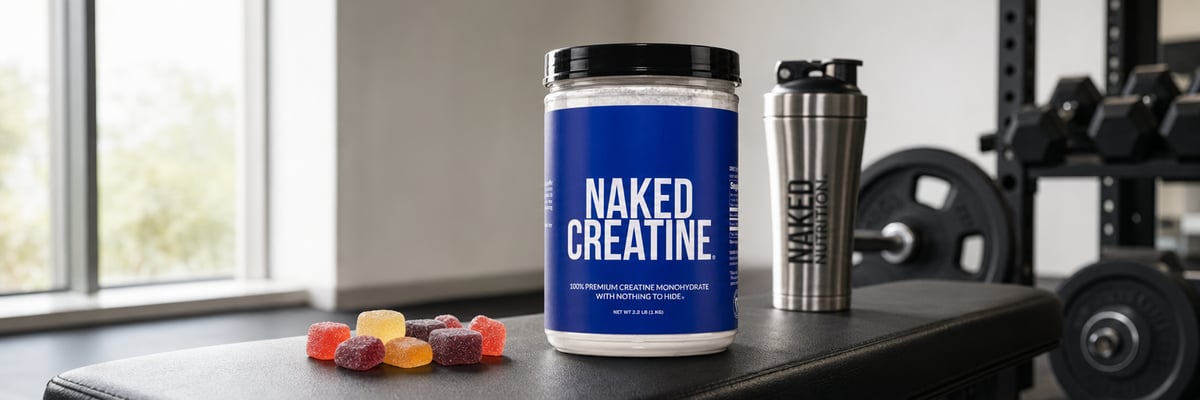
Creatine Monohydrate Powder | Naked Creatine - 2.2LB
- Free Shipping Included
- Creatine Monohydrate
- Creatine Formula
- Evidence-Based Formulas
Do Creatine Gummies Work? The Short Answer

Yes, creatine gummies work. If a gummy supplement contains creatine monohydrate at a clinically effective dose of 3–5g per day and you take it consistently, you'll get the same performance benefits you'd get from powder. The delivery format doesn't change the biochemistry.
The longer answer involves trade-offs. Gummies cost more, contain added sugars, and limit your dosing flexibility — particularly if you want to run a loading protocol. For the maintenance phase of supplementation, they're a legitimate option. For everything else, powder has a clear edge.
What this article breaks down: how gummies and powder compare on absorption, real-world costs, and when each format actually makes sense for your goals.
What Are Creatine Gummies and How Do They Work?

Creatine gummies are chewable supplements that deliver creatine monohydrate in a gelatin or pectin base, flavored with glucose syrup, citric acid, and natural or artificial flavors. A standard serving contains 3–5g of creatine, typically spread across 2–4 gummies. No water, no shaker, no measuring.
The underlying mechanism is identical to any other creatine supplement. Once absorbed into the bloodstream, creatine is transported to muscle tissue and converted into phosphocreatine — a rapidly available energy reserve. During short-burst, high-intensity activity like heavy lifting or sprinting, phosphocreatine donates a phosphate group to ADP to regenerate ATP, your body's primary energy currency. This process fuels efforts lasting roughly 8–10 seconds and enables you to sustain higher training intensity across multiple sets.
- Creatine is absorbed into the bloodstream and taken up by muscle tissue
- Inside muscle cells, it converts to phosphocreatine — a stored form of energy
- During explosive effort, phosphocreatine rapidly regenerates ATP so muscle contraction can continue
- Higher phosphocreatine stores mean more sustained power output and faster recovery between sets
- The gummy matrix is digested first; the creatine itself behaves identically once absorbed
Beyond energy metabolism, creatine supplementation activates muscle protein synthesis pathways — including mTOR — and influences satellite cell activity and myogenic regulatory factors, which support muscle fiber development over time, as Farshidfar et al. (2017) detail. The gummy format does not alter any of this. Creatine is creatine once it clears the gut.
Creatine Gummies vs. Powder: Absorption and Bioavailability

Here's what the evidence actually supports: both formats use creatine monohydrate, and once that compound enters the bloodstream, your muscles don't distinguish between sources. Bioavailability across gummies and powder is comparable, and consistent daily dosing matters far more than which format delivers it.
What the evidence doesn't support is a strong claim that gummies absorb faster or better. No large randomized controlled trial has directly compared creatine gummies against powder in a head-to-head format. Be skeptical of any brand making specific absorption superiority claims for gummies — that data doesn't exist yet.
One legitimate concern specific to gummies is stability. Creatine monohydrate degrades more readily in moist, acidic environments — converting to creatinine, a waste product — which is precisely the environment a gummy matrix creates. Quality manufacturers account for this with formulation adjustments, but it's worth confirming a product's third-party testing before buying.
| Attribute | Creatine Gummies | Creatine Powder |
|---|---|---|
| Absorption | Comparable — no clinical evidence of meaningful difference | Comparable — most researched delivery method |
| Cost per gram | 30–50% more expensive | Most cost-effective option |
| Convenience | No mixing or measuring required | Requires water, shaker, or spoon |
| Dosing flexibility | Fixed per-gummy increments only | Precise measurement at any dose |
| Sugar content | 5–10g added sugar per serving | Zero (unflavored) to minimal |
| Stability | Moisture and acidity may accelerate degradation | Stable in dry powder form |
| Vegan-friendly | Not always — gelatin-based products are animal-derived | Yes, when unflavored monohydrate |
Benefits of Creatine Gummies: What the Research Shows

The benefits below are benefits of creatine monohydrate, the active ingredient that gummies deliver. The research base here is deep — creatine is one of the most studied compounds in sports nutrition.
Strength and power output. A review of 22 studies found that creatine supplementation produced an average 8% greater increase in muscle strength and 14% greater improvement in weightlifting performance compared to placebo groups. Antonio et al. (2021) and Wax et al. (2021) both confirm that these performance gains are consistent across training populations.
Muscle recovery and training volume. By accelerating ATP regeneration between sets, creatine allows you to maintain higher training volume across a session. A study on handball players showed that short-term creatine supplementation produced significant improvements in muscle power, endurance, and sprint performance , though endurance performance was unchanged — which is exactly what the phosphocreatine mechanism predicts.
📊 What Research Says
A systematic review and meta-analysis of nearly 500 adults across 16 studies found that creatine monohydrate supplementation produced meaningful improvements in cognitive function in adults — specifically memory, attention, and information processing speed (Prokopidis et al., 2023). This effect is particularly pronounced in older adults and those with lower baseline creatine levels, such as vegetarians and vegans.
Cellular hydration and muscle fullness. Creatine draws water into muscle cells, increasing cell volume. This isn't just aesthetic — intracellular hydration is associated with anabolic signaling and contributes to the muscle fullness users notice within the first 1–2 weeks of supplementation.
Broader health benefits. Roschel et al. (2021) outline emerging evidence for creatine's role in brain health, particularly in conditions involving creatine deficits such as aging and mild traumatic brain injury. Kreider and Stout (2021) extend this to potential benefits for neurodegenerative disease, diabetes, and depression. For older adults, Chilibeck et al. (2017) found that creatine supplementation during resistance training significantly increased lean tissue mass and muscular strength.
Drawbacks of Creatine Gummies: What to Consider Before Buying

Gummies are a legitimate format, but they come with real trade-offs that most marketing glosses over. Know these before you spend the money.
Cost premium. Creatine gummies typically cost 30–50% more per gram of creatine than an equivalent powder. A month's supply of gummies runs $25–40; powder delivers the same dose for $15–25. Over a year of daily supplementation, that difference adds up significantly.
Added sugars and calories. Most gummies contain 5–10g of sugar and 20–40 additional calories per serving. For someone in a caloric deficit or managing their carbohydrate intake, this matters. Unflavored creatine powder has zero added anything.
Fixed dosing. You can only adjust intake in whole-gummy increments. If a loading phase requires 20–25g per day, you're looking at consuming 8–16 gummies daily — impractical and expensive. Powder gives you full flexibility.
Stability concerns. The moist, acidic environment of a gummy matrix accelerates creatine's conversion to creatinine. Reputable manufacturers mitigate this, but it's a format-specific risk that powder doesn't share.
Ingredient transparency. Gelatin-based gummies aren't vegan. Some products contain artificial colors, glucose syrup, and vague "creatine blend" labeling that obscures what form of creatine you're actually getting. For a deeper look at how different forms compare, see our guide on Creatine HCL vs Monohydrate .
What to look for when buying creatine gummies:
- Creatine monohydrate listed explicitly — not "creatine blend" or proprietary complex
- Clear per-serving dosage: at least 3g of creatine monohydrate per serving
- Third-party testing certification (NSF, Informed Sport, or Labdoor)
- Minimal added sugar — ideally under 5g per serving
- Pectin base (not gelatin) if you follow a vegan or vegetarian diet
Creatine Powder: The Case for Going Back to Basics
Creatine monohydrate powder is the most researched, most cost-effective, and most flexible format available. Every major clinical finding on creatine's performance benefits — the strength gains, the power improvements, the cognitive effects — was established using powder. It's the reference point everything else is measured against.
Powder gives you complete control over dosing. You can run a proper loading phase at 20–25g per day divided across 4–5 servings, drop to a 3–5g maintenance dose, or adjust based on body weight. You can mix it into water, a protein shake, juice, or coffee. You get no added sugars, no gelatin, no artificial colors — just creatine monohydrate.
When does powder make more sense than gummies? Practically speaking: if you're starting creatine for the first time and want to load quickly, if you're monitoring macros or sugar intake, if budget is a factor, or if you want the format with the longest safety record. Kreider et al. (2017) confirmed in the International Society of Sports Nutrition position stand that long-term creatine monohydrate supplementation at up to 30g per day for five years is safe in healthy individuals.
If you want the most research-backed, cost-effective creatine supplement, Naked Nutrition's Creatine Monohydrate delivers pure creatine monohydrate with a single ingredient and nothing added. No fillers, no artificial additives, no proprietary blends — just the compound that thousands of studies have tested and confirmed.
Gummies earn their place when convenience genuinely drives compliance. If the choice is between taking a gummy consistently or skipping powder because it's inconvenient, the gummy wins. But if you're already dialed in on your routine, powder is the smarter default.
How to Take Creatine for Best Results (Gummies or Powder)

The protocol is straightforward regardless of format. There are two approaches: loading or skipping straight to maintenance.
Loading phase (optional): Take 20–25g of creatine per day, divided into 4–5 equal doses, for 5–7 days. This saturates muscle creatine stores rapidly and produces noticeable effects within the first week. This approach is practical with powder and impractical with gummies — you'd need to consume 8–16 gummies daily, which is both expensive and inconvenient.
Maintenance phase: Take 3–5g of creatine daily. This is where both formats work equally well. Without a loading phase, muscle creatine stores reach saturation in approximately 3–4 weeks of consistent daily intake rather than one week.
Timing: Don't overthink it. An 8-week randomized, double-blind, placebo-controlled trial of 34 collegiate athletes confirmed that the timing of creatine monohydrate supplementation didn't confer any additional benefit — pre-workout, post-workout, or any other window produced equivalent results (Antonio et al., 2021). Take it when it fits your routine, at the same time each day.
- Loading (powder recommended): 20–25g/day split into 4–5 servings for 5–7 days
- Maintenance (gummies or powder): 3–5g/day consistently
- Timing: Not critical — pick a consistent daily window and stick to it
- Hydration: Creatine pulls water into muscle cells; adequate daily fluid intake supports this process
- Safety: Safe at 3–5g/day long-term for healthy adults; consult a physician if you have a kidney condition
One practical note on gummies: no water is required, which is a genuine convenience advantage in certain settings. That said, staying well-hydrated overall supports creatine uptake and reduces the minor GI discomfort some people experience when taking higher doses. If you experience digestive discomfort with either format, split your dose across two smaller servings rather than taking it all at once.
The most important variable isn't timing, format, or even loading — it's showing up daily. Creatine's benefits build on consistent muscle saturation over weeks, not any single dose. Pick the format you'll actually stick to, confirm the dose, and be patient with the process. If you're curious about what to expect, see How Long Does Creatine Take to Work? and Does Creatine Make You Gain Weight?
Frequently Asked Questions
Do creatine gummies actually work as well as creatine powder?
Creatine gummies can be effective, but they often deliver lower doses of creatine per serving compared to powder, which typically provides 3–5 grams in a single scoop. To match the efficacy of creatine powder, you would need to consume multiple gummies per serving, which can add up in calories and sugar. If the total daily dose of creatine is equivalent, the form of delivery matters less than consistent supplementation over time.
How much creatine is actually in a creatine gummy?
Most creatine gummies contain between 500 mg and 1.5 grams of creatine per gummy, meaning you may need to eat 3–6 gummies just to hit the research-backed dose of 3–5 grams per day. Always check the supplement facts panel rather than relying on marketing claims to confirm the actual creatine content per serving. Some brands list the dose per serving of multiple gummies, which can be misleading if you're not reading carefully.
What type of creatine is used in gummies?
Most creatine gummies use creatine monohydrate, which is the most researched and well-supported form of creatine available. Some brands may use creatine HCl or other proprietary blends, claiming better absorption, but the scientific evidence still favors creatine monohydrate as the gold standard. When choosing a gummy, prioritize products that clearly state creatine monohydrate on the label.
Are creatine gummies safe to take every day?
Yes, daily creatine supplementation is considered safe for most healthy adults, and this applies to gummies as well as powder. Decades of research support the long-term safety of creatine monohydrate at doses of 3–5 grams per day. However, because gummies contain added sugars and other ingredients, daily consumption could contribute extra calories, which is worth considering if you're monitoring your diet.
How long does it take to see results from creatine gummies?
If you're consistently hitting the recommended 3–5 grams of creatine per day through gummies, you can expect to notice improvements in strength, power output, and exercise performance within 2–4 weeks. Some people choose to do a loading phase of 20 grams per day for 5–7 days to saturate muscle creatine stores more quickly, though this is harder to achieve with gummies given the per-gummy dosage. Results vary based on training intensity, diet, and individual response to creatine.
Are creatine gummies more expensive than creatine powder?
Generally, yes — creatine gummies tend to cost significantly more per gram of creatine than traditional creatine monohydrate powder. Creatine powder is one of the most affordable supplements on the market, often costing just pennies per serving, while gummies command a premium for convenience and taste. If budget is a concern, powder is almost always the more cost-effective option for achieving the same daily creatine intake.
Do creatine gummies have any third-party certifications?
Some creatine gummy brands carry third-party certifications such as NSF Certified for Sport or Informed Sport, which verify that the product contains what it claims and is free from banned substances. However, not all gummy products on the market are third-party tested, so it's important to research the brand before purchasing. If you're a competitive athlete subject to drug testing, always choose a product with a credible third-party certification.
Who should consider creatine gummies over creatine powder?
Creatine gummies are a practical option for people who dislike mixing powders, have difficulty swallowing capsules, or want a more portable and convenient way to take creatine on the go. They can also be appealing to those who are new to supplementation and prefer a familiar, food-like format. That said, anyone who is serious about optimizing their creatine intake and managing costs will likely find that powder offers better value and dosing flexibility.
Top Product Picks
Chosen by 1 million+ customers. Free shipping on orders over $100.
Creatine Monohydrate Powder | Naked Creatine - 2.2LB
$35.99
- ✓ 100% premium creatine monohydrate
- ✓ Highest grade available: fast dissolving and quickly absorbed
- ✓ 5g of creatine per serving
- ✓ No artificial sweeteners, flavors, or colors

Strawberry Creatine Monohydrate Powder | Naked Creatine - 1.1LB
$29.99
- ✓ 100% premium creatine monohydrate
- ✓ Highest grade available: fast dissolving and quickly absorbed
- ✓ 5g of creatine per serving
- ✓ No Artificial Sweeteners, Flavors, or Colors

Lemon Lime Creatine Monohydrate Powder | Naked Creatine - 1.1LB
$29.99
- ✓ 100% premium creatine monohydrate
- ✓ Highest grade available: fast dissolving and quickly absorbed
- ✓ 5g of creatine per serving
- ✓ No artificial sweeteners, flavors, or colors