





Key Takeaways
- Timeline reality: Most people see initial changes in 8–12 weeks, meaningful transformation in 3–6 months, and significant recomposition in 6–12+ months.
- Experience matters: Beginners recompose fastest due to newbie gains; advanced trainees face a slower, harder process.
- Protein is non-negotiable: Aim for 0.73–1g of protein per pound of body weight daily to support simultaneous fat loss and muscle growth.
- The scale will lie to you: Body weight may stay flat while your body composition improves significantly. Use measurements and photos instead.
- Training structure: 3–4 days of resistance training combined with 2 days of HIIT delivers the best results for recomposition.
- Supplements that help: Protein powder and creatine monohydrate are the two best-supported additions to a recomposition plan.

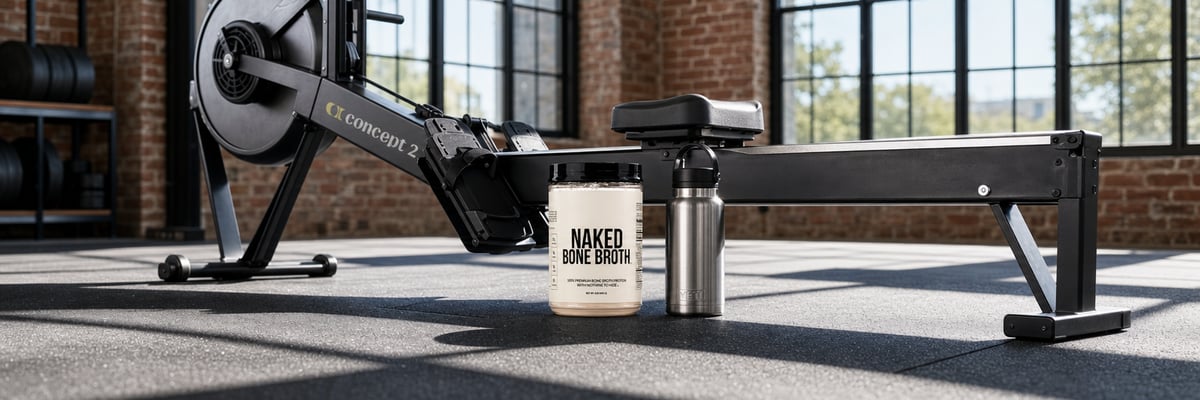
Bone Broth Protein Powder | Naked Bone Broth - 1LB
- Sourced from premium European Beef Bones
- Gently processed in Sweden without solvents
- Maximum nutrient retention and bioavailability
- 20g of protein and 17g of collagen per serving
How Long Does Body Recomposition Take? (The Short Answer)

If you're wondering how long body recomposition takes, here's the direct answer: most people see initial visible changes within 8–12 weeks, meaningful transformation by 3–6 months, and significant, lasting recomposition after 6–12 months of consistent effort. This is slower than chasing just fat loss or just muscle gain. It's also more sustainable and produces better long-term results.
Your starting point determines how fast you progress. Beginners and detrained individuals benefit from "newbie gains," a window where the body adapts quickly to new training stress and can build muscle even in a caloric deficit. Intermediate trainees see moderate, steady progress. Advanced athletes face a slower grind, because their bodies have already captured most of the low-hanging adaptations.
Body Recomposition Timeline by Experience Level
- Beginners (0–1 year training): Noticeable changes in 8–12 weeks; significant recomposition in 3–6 months
- Intermediate (1–3 years training): Visible changes in 10–16 weeks; meaningful results in 4–8 months
- Advanced (3+ years training): Subtle changes per cycle; significant recomposition takes 6–12+ months
- Detrained or returning athletes: Closer to beginner timelines due to muscle memory effects
Body recomposition is not the fastest route to either a leaner physique or a bigger one. It is, however, the most complete route. You finish the process looking and performing better without the muscle loss that accompanies aggressive dieting or the fat gain that accompanies aggressive bulking.
What Is Body Recomposition?

Body recomposition is the process of simultaneously losing fat and gaining muscle to improve your body composition. The goal isn't simply to change what you weigh. It's to change what your body is made of: more lean muscle, less fat tissue.
This distinction matters because the scale is a poor judge of progress. Two people can weigh exactly the same and look completely different based on their ratio of muscle to fat. During a successful recomposition phase, your weight might barely budge for months while your body is actively changing underneath. Clothes fit differently. Strength increases. Body fat percentage drops. The mirror tells a completely different story than the scale does.
Focusing on just one goal at a time is metabolically simpler. A pure fat loss phase uses an aggressive caloric deficit. A pure muscle-building phase uses a caloric surplus. Recomposition tries to achieve both simultaneously, which requires a more precise approach to nutrition and training.
- Beginners: Any new training stimulus drives both fat loss and muscle gain simultaneously
- Detrained individuals: Returning after a break benefits from muscle memory, accelerating regain
- Higher body fat percentage: More stored energy available to fuel muscle growth during a deficit
- Older adults and women: Can absolutely recompose, though timelines may differ from younger men
Advanced athletes can still recompose, but the process is significantly slower and requires tighter control of every variable. For them, dedicated bulking and cutting cycles often produce faster results. But for the majority of people starting a fitness routine or returning after time off, recomposition is exactly the right goal.
What Factors Affect How Fast Body Recomposition Works?

Recomposition doesn't happen at the same rate for everyone. Several variables interact to determine how fast your body responds, and understanding them helps you set realistic expectations instead of quitting too early.
- Training experience: Beginners respond faster. Advanced trainees require more precise programming to continue progressing.
- Starting body fat percentage: Higher body fat means more stored energy available to fuel muscle growth during a caloric deficit, accelerating early results.
- Hormonal profile: Testosterone, cortisol, and insulin sensitivity all influence the rate of muscle protein synthesis and fat mobilization. Men typically recompose faster than women due to higher testosterone levels, but women respond well with consistent training and high protein intake.
- Consistency: Recomposition rewards sustained effort above almost anything else. Inconsistent training and sporadic nutrition adherence will stall progress regardless of how good your plan is.
- Sleep quality: Growth hormone is primarily released during deep sleep. Poor sleep elevates cortisol, increases muscle breakdown, and drives hunger. Getting 7–9 hours per night is not optional if recomposition is your goal.
- Age: Younger individuals typically recompose faster. Adults over 40 face lower testosterone, slower metabolism, and reduced recovery capacity, but recomposition is still achievable with prioritized recovery, protein intake, and progressive resistance training.
- Caloric deficit size: Too aggressive a deficit slows or stops muscle growth. Too small a deficit slows fat loss. A moderate deficit of 200–500 calories below maintenance keeps both processes moving.
The beginner advantage is real. Research published in the Journal of Strength and Conditioning Research has shown that untrained individuals can increase muscle mass and reduce body fat simultaneously during the first several months of resistance training, even in a caloric deficit. Use that window well.
The Body Recomposition Diet: Nutrition Strategies That Work

Nutrition is where most recomposition attempts succeed or fail. The broad structure is straightforward: a high-protein diet at a moderate caloric deficit. Getting the details right is what separates consistent progress from spinning your wheels.
Protein intake is the cornerstone. Research consistently shows that eating only the RDA of 0.36g per pound of body weight is insufficient for anyone training to gain muscle. The effective range for body recomposition is 0.73–1g per pound of body weight (1.6–2.2g per kilogram). The International Society of Sports Nutrition recommends the higher end of this range specifically for people doing resistance training in a caloric deficit, where preserving muscle becomes harder.
📊 What Research Says
A controlled study on athletes found that consuming a high-protein diet during a caloric deficit preserved lean muscle mass while driving fat loss, whereas a standard-protein diet resulted in significantly more muscle loss over the same period.
Protein's value in recomposition extends beyond muscle building. It increases satiety, which naturally reduces overall caloric intake. It also has a higher thermic effect than carbohydrates or fat, meaning your body burns more calories simply digesting it.
Carbohydrates and fats don't need to be eliminated. Carbohydrates fuel training performance and replenish muscle glycogen. Healthy fats support hormonal production, including testosterone. Focus on quality sources: whole grains, vegetables, avocado, olive oil, and fatty fish. A practical macro split for recomposition is roughly 30–35% protein, 30–35% carbohydrates, and 25–30% fat.
Aim for a caloric deficit of 200–500 calories below your total daily energy expenditure. Deeper cuts than this risk muscle loss. Timing protein intake around training sessions, ideally 20–40g within a few hours of your workout, supports muscle protein synthesis when it's most active.
If hitting your daily protein target through food alone is a challenge, Naked Whey works well post-workout for fast-absorbing protein, while Naked Casein is ideal before bed to support overnight muscle protein synthesis through slow, sustained amino acid release.
The Best Training Plan for Body Recomposition

You can't recompose your body with nutrition alone. Training provides the stimulus that tells your body to build muscle rather than simply store or burn energy. For recomposition, the two most effective tools are resistance training and high-intensity interval training.
Resistance training is the foundation. Research shows a minimum of 2 days per week of resistance exercise is required to effectively build muscle and reduce body fat, but 3–4 days produces faster recomposition. Focus on compound movements that recruit multiple muscle groups simultaneously: squats, deadlifts, bench press, barbell rows, and overhead press. These exercises drive the greatest hormonal response and burn the most calories per session.
Progressive overload is the mechanism that forces continued adaptation. It means systematically increasing the demand on your muscles over time: adding weight to the bar, increasing reps at a given weight, reducing rest periods, or improving technique under load. Without progressive overload, your body has no reason to keep building muscle. A simple example: if you squat 135 lbs for 3 sets of 8 this week, next week you aim for 3 sets of 9, or 140 lbs for 3 sets of 8.
- Monday: Full-body resistance training (compound lifts)
- Tuesday: HIIT session (20 sec on / 40 sec off × 8 rounds)
- Wednesday: Rest or light active recovery (walk, stretch)
- Thursday: Upper-body resistance training
- Friday: HIIT or lower-body resistance training
- Saturday: Lower-body resistance training or active recovery
- Sunday: Full rest
High-intensity interval training (HIIT) outperforms steady-state cardio for body recomposition because it preserves muscle mass while generating a significant caloric burn in a shorter time window. Long, moderate-intensity cardio sessions can increase muscle protein breakdown, which works against your recomposition goals. A simple HIIT protocol: 20 seconds maximum effort, 40 seconds rest, repeated for 8 rounds. That's 8 minutes of effective work.
More training is not always better. Recovery is when recomposition actually happens. Build in deload weeks every 6–8 weeks by reducing training volume and intensity by 40–50%. This prevents accumulated fatigue from suppressing performance and hormonal function.
How to Track Body Recomposition Progress (Without Obsessing Over the Scale)
The scale is a poor metric for body recomposition. As you gain muscle and lose fat simultaneously, your total body weight can stay flat for weeks or even months while your body composition is actively improving. Judging progress by scale weight alone leads to unnecessary frustration and premature quitting.
Better tracking methods give you a complete picture:
- Body measurements: Measure waist, hips, chest, arms, and thighs monthly. A shrinking waist alongside growing arms tells the recomposition story clearly.
- Progress photos: Take photos every 4 weeks under identical lighting and conditions. Side-by-side comparisons reveal changes that day-to-day mirrors miss entirely.
- How clothes fit: Pants loosening at the waist while shirts tighten at the shoulders is a reliable non-scale indicator of recomposition in action.
- Strength gains: Lifting heavier or completing more reps at the same weight confirms muscle is being built.
For body fat percentage measurement, three tools are commonly used. DEXA scans are the most accurate but require a clinic visit and cost money. Skinfold calipers, when used by a trained practitioner, offer reliable tracking over time. Bioelectrical impedance devices (common in consumer scales and handheld devices) are the most convenient but the least accurate, especially when hydration fluctuates.
The practical recommendation: weigh yourself weekly, track the monthly average rather than individual readings, and conduct full body composition assessments (measurements, photos, body fat estimate) once per month. This frequency gives you enough data to spot trends without triggering daily anxiety over normal fluctuations.
Set milestone-based goals rather than scale-based ones. "Reduce waist by 2 inches in 3 months" or "add 20 lbs to my squat in 8 weeks" are actionable, motivating targets that reflect the actual changes you're working toward.
Supplements That Support Body Recomposition

Supplements don't replace a solid diet and training plan. But the right ones close genuine gaps and support the process in ways that are difficult to achieve through food alone. For body recomposition specifically, two supplements have strong research backing and practical utility.
Protein powder is the most important supplement for anyone struggling to hit their daily protein targets. Whole food protein sources take time to prepare and are harder to consume around training sessions. Naked Whey, made from 100% grass-fed whey protein with no artificial additives, is ideal post-workout when fast-absorbing protein accelerates muscle protein synthesis at its peak. Naked Casein is better before bed: its slow-digesting micellar structure releases amino acids steadily over 6–8 hours, supporting overnight muscle repair when your body does most of its recovery work.
📊 What Research Says
Creatine monohydrate is one of the most thoroughly studied performance supplements available. Multiple meta-analyses confirm it increases muscle phosphocreatine stores, improves strength output by 5–15%, and directly supports lean mass gains when combined with resistance training. It works by regenerating ATP faster during high-intensity efforts, letting you do more work per session.
Creatine monohydrate is the second supplement worth using for recomposition. Naked Creatine delivers pure creatine monohydrate with nothing added. More volume per session and greater strength output mean a stronger progressive overload stimulus, which is the engine of muscle growth.
Other supplements with modest supporting evidence include caffeine (improves training performance and fat oxidation), vitamin D (supports testosterone production and immune function, with deficiency being common), and omega-3 fatty acids (reduce exercise-induced inflammation and support recovery). None of these replace the fundamentals, but they can contribute meaningfully in a well-constructed recomposition protocol.
The core principle remains simple: train consistently, eat enough protein, maintain a moderate deficit, sleep well, and be patient. The timeline is longer than most people want to hear. The results, when the process is followed correctly, are more durable than anything a crash diet or extreme cut can produce.
Frequently Asked Questions
How long does body recomposition take to see visible results?
Most people notice visible changes in body composition between 8 and 12 weeks of consistent training and dialing in their nutrition. That said, the scale often won't reflect your progress because you're losing fat and gaining muscle simultaneously. Progress photos and body measurements are more reliable tools than scale weight during recomposition.
Is body recomposition faster for beginners than for experienced lifters?
Yes, significantly. Beginners experience what's often called "newbie gains," a period where the body responds rapidly to resistance training stimulus and can build muscle efficiently even in a caloric deficit. Experienced lifters have already captured most of those early adaptations, so recomposition is slower and requires tighter programming and nutrition precision.
Do you need to eat at a caloric deficit to recomp?
Not necessarily. Body recomposition can happen at maintenance calories, a slight deficit, or even a slight surplus depending on your training status and body fat levels. The key lever is protein intake: consuming 0.7 to 1 gram of protein per pound of bodyweight daily preserves and builds muscle while your body uses stored fat for energy. A severe deficit, however, will slow or stall muscle growth, which undermines the whole goal.
How much protein do you actually need for body recomposition?
Research consistently supports a target of 0.7 to 1 gram of protein per pound of bodyweight per day for body recomposition. A 2016 meta-analysis by Morton et al. in the British Journal of Sports Medicine found that protein intakes above 0.82 grams per pound produced diminishing returns for muscle growth. Hit that range daily, distribute it across 3 to 4 meals, and your body has what it needs to build muscle while burning fat.
Can you recomp without lifting weights?
Cardio alone won't drive meaningful muscle growth, which means true body recomposition requires resistance training as the foundation. Bodyweight training, resistance bands, or free weights all work, as long as you're progressively overloading your muscles over time. Without that stimulus, you'll lose fat but also lose muscle, which changes your body weight without improving your body composition in a meaningful way.
Why does the scale stay the same during body recomposition?
Because muscle and fat weigh the same, and you're gaining one while losing the other at roughly similar rates. A pound of muscle and a pound of fat both register identically on a scale. This is why people often feel and look leaner, notice clothes fitting differently, and see strength improvements, all while their scale weight barely moves for weeks at a time.
Are there supplements that support body recomposition?
A few supplements have solid evidence behind them. Creatine monohydrate supports muscle strength and volume, and a 2017 review by Lanhers et al. in the European Journal of Sport Science confirmed it significantly improves upper and lower body strength gains when combined with resistance training. High-quality protein supplements like whey or casein help you hit your daily protein target consistently, which is the single most important nutritional factor in recomposition.
How do you know if your body recomposition is actually working?
Track multiple metrics, not just the scale. Progress photos taken every 2 to 4 weeks under consistent lighting, weekly body measurements at the waist, hips, and arms, and your strength numbers in the gym all tell a more complete story. If you're getting stronger, your measurements are shifting in the right direction, and your body looks different in photos, recomposition is working, even if the scale hasn't moved.
Top Whey Protein Picks
Chosen by 1 million+ customers. Free shipping on orders over $100.

Pea Protein Powder | Naked Pea - 5LB
$57.99
- ✓ Sustainable Farming Practices
- ✓ Superior Amino Acid Profile
- ✓ Promote Muscle Gain
- ✓ Lose Weight

Micellar Casein Protein Powder | Naked Casein - 5lb
$109.99
- ✓ Why Micellar Casein Protein
- ✓ Promote Muscle Growth While You Sleep
- ✓ Improve Body Composition

Grass Fed Whey Isolate Protein Powder | Naked Whey Isolate - 2LB
$74.99
- ✓ Whey Protein Base
- ✓ Protein Isolate
- ✓ Grass-Fed Source