



On this page
Does Creatine Improve Stamina? What the Research Shows
Creatine is famous for building muscle, but can it also boost your endurance and keep you going longer? Science weighs in.

Key Takeaways
- Creatine improves stamina indirectly: It replenishes ATP during high-intensity efforts and accelerates recovery between intervals, which adds up to more total work capacity over time.
- Anaerobic performance is the primary target: Sprints, HIIT, and weightlifting intervals respond strongly to creatine. Steady-state aerobic endurance sees minimal direct benefit.
- Endurance athletes still have reasons to use it: Faster recovery between hard sessions, reduced muscle damage markers, and potential glycogen support make creatine relevant beyond the weight room.
- Standard dose is 3–5g per day: Loading is optional. Consistency matters more than timing.
- Creatine monohydrate remains the gold standard: No other form has matched its research record or cost-effectiveness.

Creatine Monohydrate Powder | Naked Creatine - 2.2LB
- 100% premium creatine monohydrate
- Highest grade available: fast dissolving and quickly absorbed
- 5g of creatine per serving
- No artificial sweeteners, flavors, or colors
Does Creatine Improve Stamina? What the Science Actually Says
The question sounds simple, but the answer depends entirely on what kind of stamina you're asking about. If you mean the ability to sustain a 26-mile run, creatine isn't going to move the needle much. If you mean the ability to push hard through a fifth sprint interval when your legs are already burning, creatine can make a real difference.
Creatine is a naturally occurring compound stored in muscle cells as phosphocreatine. Your body produces it, and you also get small amounts from red meat and fish. When you supplement with creatine, you increase those phosphocreatine stores, giving your muscles a larger energy reservoir to draw from during high-intensity efforts. Research confirms that creatine supplementation improves exercise recovery and supports muscle mass gains over time.
So does creatine improve stamina? The honest answer is: yes, for certain types of stamina, and indirectly for others. It helps delay fatigue during explosive, repetitive efforts by keeping your ATP supply from crashing. And because it accelerates recovery between bouts of hard work, it allows you to maintain quality across more intervals or training sessions. That's a legitimate stamina benefit, even if it doesn't fit the traditional definition of endurance.
📊 What Research Says
A widely cited study found that creatine supplementation helps delay fatigue during high-intensity, repetitive tasks by maintaining phosphocreatine availability, directly supporting the energy systems used in interval-based stamina work.
How Creatine Works in the Body

Every muscle contraction runs on adenosine triphosphate, or ATP. The problem is that your muscles store only a few seconds' worth of ATP at any given moment. When intensity is high, you burn through that supply almost instantly. The body then needs to regenerate ATP fast, and that's exactly where creatine enters the picture.
Phosphocreatine, the stored form of creatine in your muscles, donates a phosphate group to depleted adenosine diphosphate (ADP), rapidly converting it back into usable ATP. This system, known as the ATP-PCr energy system, is the fastest energy pathway your body has. It kicks in during the first 10 seconds of maximal effort and is the primary fuel source for explosive movements like sprinting, jumping, and heavy lifting.
- Your muscles store phosphocreatine alongside a small reserve of ATP ready for immediate use.
- During high-intensity effort, phosphocreatine rapidly donates a phosphate group to rebuild depleted ATP in under a second.
- This system sustains maximal output for roughly 8 to 10 seconds before glycolysis takes over.
- Supplementing with creatine increases phosphocreatine stores by up to 20 percent, extending the duration and quality of this rapid energy supply.
Your body naturally synthesizes creatine in the liver and kidneys from the amino acids arginine, glycine, and methionine. Dietary sources like beef and salmon provide additional creatine, but supplementation saturates muscle stores at levels difficult to achieve through food alone. That saturation is the mechanism behind every performance benefit creatine delivers.
Creatine for Stamina: Anaerobic vs. Aerobic Performance

Your body runs on two primary energy systems, and understanding which one creatine affects tells you exactly where it will and won't help your stamina. The anaerobic system handles short, intense efforts lasting under two minutes. The aerobic system powers longer, sustained activities by burning fat and carbohydrates with oxygen. Creatine's mechanism sits squarely in the anaerobic camp.
For anaerobic stamina, the evidence is clear. Creatine improves performance in repeated sprint efforts, HIIT protocols, and weightlifting intervals. When you're on your fourth 200-meter sprint and your phosphocreatine stores are more replete than they would be without supplementation, you maintain higher output and recover faster between reps. That's the direct stamina benefit.
For aerobic endurance, the picture is different. A runner completing a steady 10-mile tempo run is operating almost entirely on the aerobic system, where phosphocreatine resynthesis plays a minor role. Creatine isn't going to extend that run meaningfully. The honest position is that creatine offers limited direct benefit for pure aerobic endurance events.
The indirect benefit, however, is worth noting. When creatine accelerates recovery between interval efforts, athletes can complete more total work at higher quality within a session. There's also emerging evidence that creatine may support glycogen resynthesis after exercise, which could benefit endurance athletes during the recovery window between training days. Studies on recovery and creatine support this role in reducing muscle fatigue and restoring energy substrates more efficiently.
Benefits of Creatine for Endurance Athletes

If you compete in running, cycling, rowing, or triathlon, you might assume creatine isn't relevant to you. That assumption misses several meaningful benefits. Endurance sports aren't purely aerobic. A cyclist attacks on a climb. A rower explodes off the start. A triathlete surges in the final 400 meters. All of those moments are anaerobic efforts embedded inside aerobic events, and creatine supports each of them.
Beyond the explosive moments, creatine consistently reduces markers of muscle damage and inflammation after hard exercise. Endurance athletes who train twice a day or carry high weekly mileage benefit from faster tissue repair and less residual soreness heading into the next session. That compounds into higher-quality training over weeks and months.
Potential benefits for endurance athletes include:
- Improved performance in interval and tempo sessions that include repeated hard efforts
- Reduced muscle damage markers like creatine kinase after long or hard training bouts
- Faster glycogen resynthesis in the hours after a depleting workout
- Better maintenance of power or pace during the final stages of interval blocks
The one legitimate concern for endurance athletes is weight. Creatine draws water into muscle cells, and the initial gain of 1 to 3 pounds can feel costly for a sport where power-to-weight ratio matters. The practical fix is straightforward: skip the loading phase. Starting at 3 to 5 grams per day avoids the rapid water influx and allows muscle saturation to build gradually over three to four weeks. The weight gain is smaller and performance gains arrive without the bloat.
How Much Creatine Should You Take for Stamina and Endurance?

There's no special stamina dose. The same protocol that works for strength athletes works for endurance athletes. What changes is the strategy you choose based on your goals and sensitivity to water retention.
| Protocol | Dose | Timeline to Saturation | Best For |
|---|---|---|---|
| Loading Phase | 20g per day for 5–7 days, split into 4 doses, then 5g maintenance | 5–7 days | Athletes who want rapid saturation and are less concerned about short-term water retention |
| Standard Daily Dose | 3–5g per day, every day | 3–4 weeks | Endurance athletes, those sensitive to bloating, or anyone preferring simplicity |
Timing is less critical than consistency. Post-workout is a reasonable default because insulin sensitivity is elevated and muscle uptake is efficient, but taking creatine at any consistent time each day produces the same long-term saturation. Take it on rest days too. Skipping non-training days depletes muscle stores and slows the process.
Hydration matters more with creatine than without it. Creatine pulls water into muscle cells, so your total fluid demand increases. Aim to drink at least an additional 16 to 20 ounces of water daily when supplementing, and more if you're training in heat.
What Type of Creatine Is Best for Stamina?

Supplement marketing will try to convince you that newer creatine forms, like creatine HCl, buffered creatine, or creatine ethyl ester, offer superior absorption or fewer side effects. The research doesn't support paying a premium for any of them. Creatine monohydrate has decades of published studies behind it, the most consistent performance data, and the lowest cost per gram. For stamina and endurance, it remains the right choice.
What matters beyond the form is the purity. Many creatine products contain fillers, artificial sweeteners, or undisclosed additives that add nothing to performance. A single-ingredient creatine monohydrate is all you need.
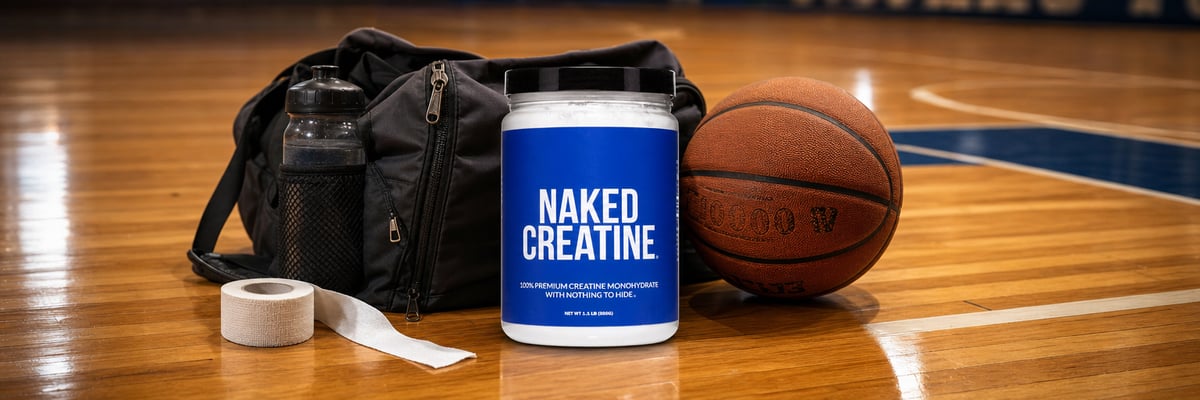
Naked Creatine is a pure creatine monohydrate with a single ingredient and no fillers, artificial flavors, or additives. Third-party tested for purity. If you want creatine without anything extra, Naked Creatine is the straightforward choice.
If you experience GI discomfort with standard monohydrate, creatine HCl dissolves more readily in water and may be easier on your stomach at smaller doses. But this is a comfort adjustment, not a performance upgrade. The evidence base for monohydrate is simply unmatched, and the cost difference rarely justifies switching.
Potential Side Effects of Creatine

Creatine is one of the most studied supplements in sports nutrition, and its safety profile at standard doses is well established. For most healthy adults, 3 to 5 grams per day over months or years raises no safety concerns. That said, a few side effects are worth understanding so you can avoid them.
- Bloating and water retention: Caused by water being pulled into muscle cells. Most common during a loading phase. Skipping loading virtually eliminates this.
- GI discomfort: Nausea and cramping occur at high single doses. Split your dose or switch to 3–5g daily to resolve it.
- Weight gain: Initial gain is intracellular water, not fat. Typically 1 to 3 pounds. Stabilizes after the first few weeks.
- Anxiety or jitters: Occasionally reported anecdotally but not supported by controlled research. Creatine has no stimulant mechanism.
- Kidney health: Safe for individuals with healthy kidney function. Anyone with pre-existing kidney conditions should consult a physician before supplementing.
The kidney concern deserves a direct answer. Creatine supplementation does raise serum creatinine, a marker used to assess kidney function, but this is a metabolic byproduct of creatine breakdown, not a sign of kidney stress. In healthy individuals, multiple long-term studies confirm that creatine does not impair kidney function. If you have a diagnosed kidney condition, get medical clearance first.
If you experience bloating or digestive issues, the solution is almost always the same: lower the dose, skip the loading phase, and drink more water. Most people who "can't tolerate creatine" are simply taking too much at once.
Frequently Asked Questions
Does creatine actually improve stamina and endurance?
Creatine primarily boosts short-burst, high-intensity performance by replenishing ATP stores rapidly, which can indirectly support stamina by allowing you to train harder over time. However, its direct impact on aerobic endurance activities like long-distance running or cycling is more limited compared to its benefits for strength and power output. That said, improved recovery between intervals and reduced muscle fatigue can contribute to better overall endurance performance.
How long does it take for creatine to improve stamina?
Most people begin noticing performance improvements within 1–2 weeks of consistent creatine supplementation, especially when following a loading phase of 20g per day for 5–7 days. Without a loading phase, a maintenance dose of 3–5g daily typically takes 3–4 weeks to fully saturate muscle creatine stores. Stamina-related benefits tied to training adaptations may take several weeks of consistent use alongside a structured workout program.
What type of creatine is best for improving stamina?
Creatine monohydrate remains the most researched and widely recommended form for all performance goals, including stamina, due to its proven efficacy and cost-effectiveness. Other forms like creatine HCl may be easier on digestion and require smaller doses, but they don't have significantly more evidence supporting superior stamina benefits. Choosing a third-party tested creatine monohydrate is generally the smartest and most reliable option.
Is creatine safe to take daily for stamina support?
Yes, creatine monohydrate is one of the most extensively studied sports supplements and has been shown to be safe for long-term daily use in healthy individuals. Research spanning multiple years has found no adverse effects on kidney or liver function in people without pre-existing conditions. As always, it's advisable to consult a healthcare professional before starting any new supplement, particularly if you have underlying health concerns.
Does creatine help with cardio and aerobic endurance specifically?
Creatine's benefits are most pronounced in anaerobic, high-intensity activities, but it can still support cardio by improving your capacity during repeated sprint intervals and reducing perceived fatigue. Some studies suggest creatine supplementation may enhance performance in sports that combine aerobic and anaerobic demands, such as soccer, rowing, or swimming. For purely steady-state cardio like marathon running, the direct benefits are modest, though better recovery and training output can yield long-term gains.
What is the recommended dosage of creatine for stamina improvement?
The standard maintenance dose for creatine is 3–5 grams per day, which is sufficient to maintain saturated muscle creatine levels for most individuals. If you want faster results, a loading protocol of 20 grams per day split into four doses for 5–7 days can accelerate saturation before dropping to the maintenance dose. Timing is flexible — creatine can be taken pre- or post-workout, or at any consistent time each day.
Can women take creatine to improve stamina?
Absolutely — creatine is equally effective and safe for women looking to improve stamina, strength, and overall athletic performance. Research shows women respond similarly to creatine supplementation in terms of muscle creatine uptake and performance enhancement. There is no evidence that creatine negatively impacts hormonal health in women, making it a well-supported choice for female athletes and active individuals.
Does creatine cause weight gain that could hurt stamina?
Creatine can cause an initial increase in body weight of 1–3 pounds due to increased water retention within muscle cells, not fat gain. For most endurance and stamina-based activities, this modest weight increase is generally offset by the performance benefits creatine provides, such as reduced fatigue and faster ATP replenishment. Athletes in weight-class sports should factor this in, but for general stamina improvement, the added intramuscular hydration is considered beneficial rather than detrimental.
Top Creatine Picks
Chosen by 1 million+ customers. Free shipping on orders over $100.

Creatine Monohydrate Powder | Naked Creatine - 1.1LB
$21.99
- ✓ 100% premium creatine monohydrate
- ✓ Highest grade available: fast dissolving and quickly absorbed
- ✓ 5g of creatine per serving
- ✓ No artificial sweeteners, flavors, or colors
Creatine Monohydrate Powder | Naked Creatine - 2.2LB
$35.99
- ✓ 100% premium creatine monohydrate
- ✓ Highest grade available: fast dissolving and quickly absorbed
- ✓ 5g of creatine per serving
- ✓ No artificial sweeteners, flavors, or colors

Creatine Monohydrate Powder | Naked Creatine - 500g
$25.99
- ✓ Improve Strength and Performance
- ✓ Recover Quicker During Exercise
- ✓ Promote Muscle Gain